Showing posts with label 1st Amendment rights. Show all posts

Friday, November 02, 2012

Blog #41 -- Do we have free speech during war times?


During the Great War, the United States went to great lengths to stop people from expressing their views on the war and the draft. According to historian Sean Dennis Cashman, Wilson that war "required illiberalism at home to reinforce the men at the front. We couldn't fight Germany and maintain the ideals of Government that all thinking men shared...once led into war, [Americans] will forget there ever was such a thing as tolerance" (505).


So, in order to set Europe free from tyranny, the government had to restrict more of Americans' rights. Historian Howard Zinn has written at length that part of this suppression was done to keep Americans from expressing their anti-war sentiments/feelings:
- Why should we get into a war that we have no interests in? This is only about European colonialists, not U.S. interests;

- Why should I be drafted to go protect France or Belgium? (only 73,000 volunteered in the first 6 weeks after Wilson declared war on Germany in April 1917);

- Why should we spend millions and millions of our tax money to do this?;

- Why should we join a war that current French soldiers are beginning to mutiny against? (in essence, why we should we join a losing fight?);

- Why should we break away from our tradition of isolationism? It's served us well for this long (if it ain't broke, don't fix it);


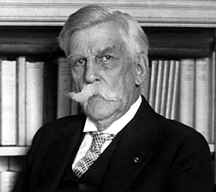
So Wilson and Congress together got tough on this kind of anti-war talk and anti-draft interference w/ the Espionage Act of 1917 and the Sedition Act of 1918. The Supreme Court affirmed that we do NOT have the right to free speech as long as it creates a "clear and present danger" (much like yelling "FIRE!" in a crowded theatre like Supreme Court Justice Oliver Wendell Holmes jr. so eloquently phrased it in the 1919 court decision, Schenck vs. U.S.).  Under these acts, a person can be fined up to a max of $10,000 (almost $200,000 in 2012 dollars) and given a 20 year sentence for interfering with the sale of war bonds or the draft, or saying anything profane, disloyal, or abusive about the government. Obviously, these laws violate the 1st Amendment.


A speech like this one by Eugene Debs is the kind of thing that got him in trouble and thrown in the big house:


"Wars throughout history have been waged for conquest and plunder. ...the
working class who fight all the battles, the working class who make the supreme
sacrifices, the working class who freely shed their blood and furnish their
corpses, have never yet had a voice in either declaring war or making peace. It
is the ruling class that invariably does both. They alone declare war and they
alone make peace. They are continually talking about their patriotic
duty. It is not their but your patriotic duty that they are concerned
about. There is a decided difference. Their patriotic duty
never takes them to the firing line or chucks them into the trenches."
(emphasis added)


*Debs was sentenced to jail for this speech and while in jail ran for President under the Socialist Party for which he received almost one million votes in 1912 and in 1920! Website for Debs: http://www.eugenevdebs.com/


During wartime, there is a feeling that certain ideas may be considered dangerous, traitorous, or even downright unpatriotic. Many have been accused of such things when criticizing their government during times of war, and our history book mentions some of them.  As I mentioned above, Eugene V. Debs, a Socialist Party leader and candidate for the Presidency, was sentenced to ten years in prison and fined $10,000 for "speaking out against the war and the draft" (Danzer, et. al. 392). Anarchist Emma Goldman was convicted and sentenced for creating a No Conscription League and then was deported to Russia after two years in jail. 

But my questions still remain:
1. Is questioning your country's conduct during a war o.k.?

2. Should asking questions about how the war is conducted, about the tactics being used (torture, waterboarding, etc.), about how the goals are being met (or if they're being met at all), or is it all worth the sacrifice of all the young men and women's lives??

3. Is this line of questioning during war time o.k. or does it make you unpatriotic? Why?

Your response to all three questions should be a minimum of 250 words, due by Wednesday, November 7.

Saturday, October 25, 2008

Blog #6 - Free Speech During War Time - Treason or Acceptable?

During the Great War, the United States went to great lengths to stop people from expressing their views on the war and the draft. According to historian Sean Dennis Cashman, Wilson that war "required illiberalism at home to reinforce the men at the front. We couldn't fight Germany and maintain the ideals of Government that all thinking men shared...once led into war, [Americans] will forget there ever was such a thing as tolerance" (505). So, in order to set Europe free from tyranny, we had to restrict America more of its rights.

Historian Howard Zinn has written at length that part of this suppression was done to keep Americans from expressing their anti-war sentiments/feelings:

- Why should we get into a war that we have no interests in? This is only about European colonialists, not U.S. interests;

- Why should I be drafted to go protect France or Belgium? (only 73,000 volunteered in the first 6 weeks after Wilson declared war on Germany in April 1917);

- Why should we spend millions and millions of our tax money to do this?;

- Why should we join a war that current French soldiers are beginning to mutiny against? (in essence, why we should we join a losing fight?);

- Why should we break away from our tradition of isolationism? It's served us well for this long (if it ain't broke, don't fix it);


So Wilson and Congress together got tough on this kind of anti-war talk and anti-draft interference w/ the Espionage Act of 1917 and the Sedition Act of 1918. The Supreme Court affirmed that we do NOT have the right to free speech as long as it creates a "clear and present danger" (much like yelling "FIRE!" in a crowded theatre like Supreme Court Justice Oliver Wendell Holmes so eloquently phrased it in the 1919 court decision, Schenck vs. U.S.).

A speech like this one by Eugene Debs is the kind of thing that got him in trouble and thrown in the big house:

"Wars throughout history have been waged for conquest and plunder. ...the working class who fight all the battles, the working class who make the supreme sacrifices, the working class who freely shed their blood and furnish their corpses, have never yet had a voice in either declaring war or making peace. It is the ruling class that invariably does both. They alone declare war and they alone make peace. They are continually talking about their patriotic duty. It is not their but your patriotic duty that they are concerned about. There is a decided difference. Their patriotic duty never takes them to the firing line or chucks them into the trenches." (emphasis added)

*Debs was sentenced to jail for this speech and while in jail ran for President under the Socialist Party for which he received almost one million votes in 1912 and in 1920! Website for Debs: http://www.eugenevdebs.com/

But my question still remains:

  • is questioning your country's conduct during a war o.k.?

  • Should asking questions about how the war is conducted, about the tactics being used (torture, waterboarding, etc.), about how the goals are being met (or if they're being met at all), or is it all worth the sacrifice of all the young men and women's lives??

  • Is this line of questioning during war time o.k. or does it make you unpatriotic? Why?

    Minimum of 200 word response - due Monday, October 27th.

Wednesday, December 13, 2006

Journal #8 - Freedom of the Press vs. Wartime Government

I bring up the dual issues of censorship of ideas and censorship of the press during wartime because it came up during the talk on the Espionage and Sedition Acts during the Great War. Under these acts, a person can be fined up to a max of $10 grand and given a 20 year sentence for interfering with the sale of war bonds or the draft, or saying anything profane, disloyal, or abusive about the government. Obviously, these laws violate the 1st Amendment.

During wartime, there is a feeling that certain ideas may be considered dangerous, traitorous, or even downright unpatriotic. Many have been accused of such things when criticizing their government during times of war, and our history book mentions some of them. Eugene V. Debs, a Socialist Party leader and candidate for the Presidency, was sentenced to ten years in prison and fined $10,000 for "speaking out against the war and the draft" (Danzer, et. al. 392). Anarchist Emma Goldman was convicted and sentenced for creating a No Conscription League and then was deported to Russia after two years in jail.

The legal reasoning backing these cases up was set in cases like Schenck v. U.S. (1919). Eminent justice Oliver Wendell Holmes jr. stated that "the question in every case is whether the words used are used in such circumstances and are of such a nature as to create a clear and present danger that they will bring about the evils that Congress has a right to prevent." Justice Holmes went on comparing protecting free speech of the guy who yells "FIRE!" in a crowded movie theatre. Holmes implied that Mr. Schenck's wartime leaflets were that kind of clear and present danger and therefore needed to be censured. Is Justice Holmes correct when he compares the two? Or should there be freedom of expression even during times of war?

Then there's the case of the press. Should the press have access to everything as if there wasn't a war going on? What if the war had secret information? Should they publish or release the info to the public? How much censorship is too much? How much is too little?

You can pick either freedom of the press or freedom of speech, or feel free to tackle both issues. Use a specific example if you'd like. All submissions should be a minimum of 150 words (that's for you, Joe!).

Tuesday, September 19, 2006

Photo ID to vote: Good idea or bad idea?

In Congress currently is H.R. 4844, a bill that would require voters to present a photo ID at the polls in order to vote. This quote is taken from http://thomas.loc.gov/.
"To amend the National Voter Registration Act of 1993 to require any individual who desires to register or re-register to vote in an election for Federal office to provide the appropriate State election official with proof that the individual is a citizen of the United States to prevent fraud in Federal elections, and for other purposes."

Pros and cons:
1. Photo ID helps prevent voter fraud.
2. Photo ID is impractical and costly for the elderly and poor.
3. Many people already have this ID - their driver's license - so it will cost little to implement.
4. There's little evidence to suggest that such voter fraud actually exists.
5. Illegal aliens are prevented from voting by such a law.
6. Judges have recently struck down laws like these (or given injunctions to stop them) in states like Missouri http://www.kansascity.com/mld/kansascity/news/politics/15519955.htm, Georgia, Ohio, Indiana, and Arizona.

Read up on it at http://www.salon.com/news/feature/2006/09/15/voterid/index_np.html

So tell us what you think: should Americans have a photo ID to vote in federal elections? Why or why not?