Through our study of civil rights so far, we have seen how many laws have been put into place such as the 15th Amendment: “no voting discrimination allowed based upon race" and also the 14th Amendment: “provided for equal protection under the law" and citizenship for freed slaves. All theses laws were put into place to make sure that all races have equal rights.
So, my two questions for you are: What is your view on discrimination today? Do you think that we still need to pass laws to make sure that all races get an equal right? (Think about Proposal 2)
Here is a great website that answers common questions about Proposal 2.
http://www.michigancivilrights.org/media/MCRI_FAQs.pdf
Editor's note: the following two paragraphs come from the link Emily provided above. Proposal 2 was passed by Michigan voters in November 2006, and to its supporters, it was supposed to end discrimination based upon race. To its critics, Proposal 2 would end affirmative action. The link is a pro-proposal 2 site.
"PROPOSAL 2 - FREQUENTLY ASKED QUESTIONS
Proposal 2 will amend the Michigan Constitution by adding a new Section 26 to Article I that would prohibit state and local government from discriminating against or granting preferential treatment to any individual or group based on race, sex, color, ethnicity or national origin in the areas of public employment, public contracting and public education.
What would this proposal affect?
Public employment, public education, and public contracting by the state government and all of
its subdivision -- including the state itself, any city, county, public college, university, or
community college, school district, or other political subdivision or governmental instrumentality of or within the State of Michigan."
Emily B. - 6th Hour
Wednesday, April 25, 2007


Wednesday, April 04, 2007
Journal #6 - 40 Ways to Look at JFK
 After reading and listening to the different views of President Kennedy's life as seen through different biographers' eyes, it's time for your opinion/assessment.
John Kennedy's biographers are usually broken into two groups: one group works to reinforce the image of Kennedy as icon, as the ideal president. They tend to gloss over the difficult stuff in his life with the idea that it's not important to know that kind of info about him. These biographers also stress his good qualities and downplay his bad qualities.
The second group of biographers are iconoclasts; they are trying to poke holes in the JFK myth by finding evidence to refute many of the cherished (and false) stories about the Kennedy family, clan, and presidency. These biographers are like realist authors - they give you the gritty details of a person's life; the fact that this person was the president doesn't seem to phase them.
The American people have consistently voted JFK (along with Lincoln) as their greatest American President, yet historians have given him the title "Most Overrated" in American Heritage magazine. When looking at his Congressional record, he didn't do much. Almost the same thing can be said for his Presidential record; how significant were the Peace Corps and the race to the moon in the long run?

Your job: answer the following questions
1. Share your assessment of the man and his job as president by looking back at your notes on the 9 sections of the book. Explain your reasoning with specific examples.
2. Where should biographers draw the line on their subjects? How much is too much and how little is too little?
It really boils down to what the main job of a biographer is. 250 words minimum.
http://www.maryferrell.org/wiki/index.php/Main_Page
Great link to a tribute website to a JFK archivist, Mary Ferrell.
Thursday, March 15, 2007
Journal #5 - Speeches from Good Night and Good Luck
 Choose three statements – one from each speech – and discuss how each of your statements can be applied to our world and the political or social situations today.
" No one familiar with the history of this country can deny that congressional committees are useful. It is necessary to investigate before legislating, but the line between investigating and persecuting is a very fine one and the junior Senator from Wisconsin has stepped over it repeatedly. His primary achievement has been in confusing the public mind, as between the internal and the external threats of Communism. We must not confuse dissent with disloyalty. We must remember always that accusation is not proof and that conviction depends upon evidence and due process of law. We will not walk in fear, one of another. We will not be driven by fear into an age of unreason, if we dig deep in our history and our doctrine; and remember that we are not descended from fearful men. Not from men who feared to write, to speak, to associate, and to defend causes that were for the moment unpopular. This is no time for men who oppose Senator McCarthy's methods to keep silent, or for those who approve. We can deny our heritage and our history, but we cannot escape responsibility for the result. There is no way for a citizen of a republic to abdicate his responsibilities. As a nation we have come into our full inheritance at a tender age. We proclaim ourselves, as indeed we are, the defenders of freedom, wherever it continues to exist in the world, but we cannot defend freedom abroad by deserting it at home. The actions of the junior Senator from Wisconsin have caused alarm and dismay amongst our allies abroad, and given considerable comfort to our enemies. And whose fault is that? Not really his. He didn't create this situation of fear; he merely exploited it — and rather successfully. Cassius was right. 'The fault, dear Brutus, is not in our stars, but in ourselves.' Good night, and good luck."
– See it Now broadcast, March 9 1954
"If we confuse dissent with disloyalty — if we deny the right of the individual to be wrong, unpopular, eccentric or unorthodox — if we deny the essence of racial equality then hundreds of millions in Asia and Africa who are shopping about for a new allegiance will conclude that we are concerned to defend a myth and our present privileged status. Every act that denies or limits t he freedom of the individual in this country costs us the . . . confidence of men and women who aspire to that freedom and independence of which we speak and for which our ancestors fought."
 he freedom of the individual in this country costs us the . . . confidence of men and women who aspire to that freedom and independence of which we speak and for which our ancestors fought."
– Ford Fiftieth Anniversary Show, CBS and NBC, June 1953
“We are currently wealthy, fat, comfortable and complacent. We have currently a built-in allergy to unpleasant or disturbing information. Our mass media reflect this. But unless we get up off our fat surpluses and recognize that television in the main is being used to distract, delude, amuse and insulate us, then television and those who finance it, those who look at it and those who work at it, may see a totally different picture too late. Our history will be what we make it. And if there are any historians about fifty or a hundred years from now, and there should be preserved the kinescopes for one week of all three networks, they will there find recorded in black and white, or color, evidence of decadence, escapism and insulation from the realities of the world in which we live. I invite your attention to the television schedules of all networks between the hours of 8 and 11 p.m., Eastern Time. Here you will find only fleeting and spasmodic reference to the fact that this nation is in mortal danger. There are, it is true, occasional informative programs presented in that intellectual ghetto on Sunday afternoons. But during the daily peak viewing periods, television in the main insulates us from the realities of the world in which we live. If this state of affairs continues, we may alter an advertising slogan to read: LOOK NOW, PAY LATER. For surely we shall pay for using this most powerful instrument of communication to insulate the citizenry from the hard and demanding realities which must be faced if we are to survive. I mean the word survive literally. If there were to be a competition in indifference, or perhaps in insulation from reality, then Nero and his fiddle, Chamberlain and his umbrella, could not find a place on an early afternoon sustaining show. If Hollywood were to run out of Indians, the program schedules would be mangled beyond all recognition. Then some courageous soul with a small budget might be able to do a documentary telling what, in fact, we have done--and are still doing--to the Indians in this country. But that would be unpleasant. And we must at all costs shield the sensitive citizens from anything that is unpleasant. I am entirely persuaded that the American public is more reasonable, restrained and more mature than most of our industry's program planners believe. Their fear of controversy is not warranted by the evidence. I have reason to know, as do many of you, that when the evidence on a controversial subject is fairly and calmly presented, the public recognizes it for what it is--an effort to illuminate rather than to agitate. I do not advocate that we turn television into a 27-inch wailing wall, where longhairs constantly moan about the state of our culture and our defense. But I would just like to see it reflect occasionally the hard, unyielding realities of the world in which we live. I would like to see it done inside the existing framework, and I would like to see the doing of it redound to the credit of those who finance and program it. Measure the results by Nielsen, Trendex or Silex-it doesn't matter. The main thing is to try. The responsibility can be easily placed, in spite of all the mouthings about giving the public what it wants. It rests on big business, and on big television, and it rests at the top. Responsibility is not something that can be assigned or delegated. And it promises its own reward: good business and good television. To those who say people wouldn't look; they wouldn't be interested; they're too complacent, indifferent and insulated, I can only reply: There is, in one reporter's opinion, considerable evidence against that contention. But even if they are right, what have they got to lose? Because if they are right, and this instrument is good for nothing but to entertain, amuse and insulate, then the tube is flickering now and we will soon see that the whole struggle is lost.This instrument can teach, it can illuminate; yes, and it can even inspire. But it can do so only to the extent that humans are determined to use it to those ends. Otherwise it is merely wires and lights in a box. There is a great and perhaps decisive battle to be fought against ignorance, intolerance and indifference. This weapon of television could be useful."
Speech at Radio-Television News Directors Association, Chicago, October 15, 1958.
Minimum of 250 words - Due Monday 3/26
Thursday, March 08, 2007
Nagging questions about World War 2
We've finished our unit on World War 2 but that doesn't mean that we've answered all of the questions out there. After the test this week, you guys came up with some very interesting thoughts and questions that showed some deeper thinking. Here are some of the best questions (you're responsible for answering at least one by Pie Day 3/14 Wednesday at 11:30 a.m.):
1. What happened in Detroit in 1943 that created all the tension for the race riot? - Shayna

2. To what degree did Hitler's service in World War I influence his later politics? - Martin
3. Holocaust deniers claim that the Holocaust never occurred, yet how can they deny it with so much visual, actual proof? - Martin
4. I know that the U.S. had a great military back during the war, but it's hard for me to understand how in some of the battles there was such a huge difference in the number of casualties. For instance, at Iwo Jima, 6,000 Americans vs. 20,500 Japanese. Okinawa was much worse: 12,600 (7,600 soldiers + 5,000 sailors) Americans vs. 110,000 Japanese. What do you think accounts for the difference in the numbers? - Colleen
5. According to the textbooks, we saw Stalin as an ally during the war but he was responsible for killing more of his own people than Hitler. Everyone knows about Hitler and the Holocaust but we hear little about Stalin and these deaths. Why is that? - Allison and Colleen
6. Since there were so many more Jews in the concentration camps than Nazis, why didn't they try to band together and fight back? - Shayla, Andy R.
7. In every war there are P.O.W.s. Did the United States have any enemy P.O.W.s during WW2 like we do now with the Iraq War at Guantanamo Bay? Do you think we treated them as badly?
- Alex S.
8. What if the U.S. didn't enter the war, how would the U.S./the world be different today? - Ashley, Jill, Lori, Kaitlyn,
9. Do you think that Oppenheimer and those other scientists really thought that they were "saving lives" when they built the atomic bomb? - Alex L.
10. Why would anyone be a kamikaze pilot? What must it be like? Did his family receive anything in return? - Ryan, Crystal, Ciara, Andrew W., Larry, Brittany, Adam
11. Have we really learned from the Holocaust when we look at Rwanda and Darfur? - Crystal
12. How would you have survived the concentration camps? Would you have struggled on and lived through the horror or would you have rather died and been spared the agony? - Megan
13. What made Hitler the way he was? How did he become so popular and influential? - Hannah, Larry, Erin, Samantha, Adam, Ryan, Jasmine, Imani, Shayna, Martin, Claire, Trevor, Leah, Shayla,
14. How are relations between the U.S. and Japan today? Do the atomic bombs play any role in these relations? - Alice
15. Where was Superman during all this time? - Thomas
Editor's Note: I think I found the answer, Thomas. Unfortunately, the action in the comics never matched reality.
Detroit News account of 1943 race riot: http://info.detnews.com/history/story/index.cfm?id=185&category=events
Also, I've checked Ebay and ration books are selling for between $1 and $10 if you're interested in having your own set.
When looking for info on Hitler, take care to make sure your source is very credible. Like with most historical figures, legends have been repeated so often that they have become fact. That makes it difficult to find accurate info.
Please post just your first name and last initial.
1. What happened in Detroit in 1943 that created all the tension for the race riot? - Shayna

2. To what degree did Hitler's service in World War I influence his later politics? - Martin
3. Holocaust deniers claim that the Holocaust never occurred, yet how can they deny it with so much visual, actual proof? - Martin
4. I know that the U.S. had a great military back during the war, but it's hard for me to understand how in some of the battles there was such a huge difference in the number of casualties. For instance, at Iwo Jima, 6,000 Americans vs. 20,500 Japanese. Okinawa was much worse: 12,600 (7,600 soldiers + 5,000 sailors) Americans vs. 110,000 Japanese. What do you think accounts for the difference in the numbers? - Colleen
5. According to the textbooks, we saw Stalin as an ally during the war but he was responsible for killing more of his own people than Hitler. Everyone knows about Hitler and the Holocaust but we hear little about Stalin and these deaths. Why is that? - Allison and Colleen
6. Since there were so many more Jews in the concentration camps than Nazis, why didn't they try to band together and fight back? - Shayla, Andy R.
7. In every war there are P.O.W.s. Did the United States have any enemy P.O.W.s during WW2 like we do now with the Iraq War at Guantanamo Bay? Do you think we treated them as badly?
- Alex S.
8. What if the U.S. didn't enter the war, how would the U.S./the world be different today? - Ashley, Jill, Lori, Kaitlyn,
9. Do you think that Oppenheimer and those other scientists really thought that they were "saving lives" when they built the atomic bomb? - Alex L.
10. Why would anyone be a kamikaze pilot? What must it be like? Did his family receive anything in return? - Ryan, Crystal, Ciara, Andrew W., Larry, Brittany, Adam
11. Have we really learned from the Holocaust when we look at Rwanda and Darfur? - Crystal
12. How would you have survived the concentration camps? Would you have struggled on and lived through the horror or would you have rather died and been spared the agony? - Megan
13. What made Hitler the way he was? How did he become so popular and influential? - Hannah, Larry, Erin, Samantha, Adam, Ryan, Jasmine, Imani, Shayna, Martin, Claire, Trevor, Leah, Shayla,
14. How are relations between the U.S. and Japan today? Do the atomic bombs play any role in these relations? - Alice
15. Where was Superman during all this time? - Thomas

Editor's Note: I think I found the answer, Thomas. Unfortunately, the action in the comics never matched reality.
Detroit News account of 1943 race riot: http://info.detnews.com/history/story/index.cfm?id=185&category=events
Also, I've checked Ebay and ration books are selling for between $1 and $10 if you're interested in having your own set.
When looking for info on Hitler, take care to make sure your source is very credible. Like with most historical figures, legends have been repeated so often that they have become fact. That makes it difficult to find accurate info.
Please post just your first name and last initial.
Sunday, March 04, 2007
Links to World War 2 flash sites
Operation Torch - invasion of North Africa
http://www.anarmyatdawn.com/interactivemap.htm
Winning North Africa
http://www.bbc.co.uk/history/worldwars/wwtwo/launch_ani_north_africa_campaign.shtml
D-Day Landings
http://www.bbc.co.uk/history/worldwars/wwtwo/launch_ani_d_day.shtml
Overview of the Overlord Campaign
http://www.bbc.co.uk/history/worldwars/wwtwo/launch_ani_overlord_campaign.shtml
http://www.anarmyatdawn.com/interactivemap.htm
Winning North Africa
http://www.bbc.co.uk/history/worldwars/wwtwo/launch_ani_north_africa_campaign.shtml
D-Day Landings
http://www.bbc.co.uk/history/worldwars/wwtwo/launch_ani_d_day.shtml
Overview of the Overlord Campaign
http://www.bbc.co.uk/history/worldwars/wwtwo/launch_ani_overlord_campaign.shtml
Thursday, February 08, 2007
Journal #3 - Will the past ever leave us alone?
William Faulkner, a great American writer of the first half of the 20th Century wrote:
"The past is never dead. It's not even past."
I got to thinking about this quote as we're coming up to our unit on World War II and all of the awful things that happened during that war. The death toll is staggering. An estimated 62 million people were killed, 37 million civilians and 25 millions soldiers. There were crimes against humanity - the Holocaust visited upon Europe's Jews and other outsiders; 7 million Chinese civilians killed not only by the Japanese but also in a bloody civil war; and Allied soldiers brutally kept in Japanese prisoner-of-war camps in Asia.
It has been over 60 years since this war ended, yet we still see reminders of this war in many places that we go.
Article on Japan's apology for its WW2 legacy - http://www.voanews.com/english/archive/2005-08/2005-08-15-voa6.cfm
Casualties stats - http://www.reference.com/browse/wiki/World_War_II_casualties
"The past is never dead. It's not even past."
I got to thinking about this quote as we're coming up to our unit on World War II and all of the awful things that happened during that war. The death toll is staggering. An estimated 62 million people were killed, 37 million civilians and 25 millions soldiers. There were crimes against humanity - the Holocaust visited upon Europe's Jews and other outsiders; 7 million Chinese civilians killed not only by the Japanese but also in a bloody civil war; and Allied soldiers brutally kept in Japanese prisoner-of-war camps in Asia.
It has been over 60 years since this war ended, yet we still see reminders of this war in many places that we go.
1. The United Nations Security Council is based upon the winners of the war and hasn't changed to reflect the world as it is today;
2. Japan has little to no armed forces;
3. Germany still pays reparations to the survivors of the Holocaust;
4. A distrust between the Soviet Union and America during the war carried over into a 46 year Cold War which we will continue to pay for until many of us are old and gray;
5. The cloud of Japanese internment camps hangs over America as a gross violation of Japanese-Americans civil liberties;
6. And we all live under the specter of a nuclear blast because of the race for the atom bomb in the 1940s that America won in July 1945 when we detonated one successfully in Trinity, New Mexico. One of the biggest threats to world peace, if not the biggest threats, is the spread of nuclear weapons.
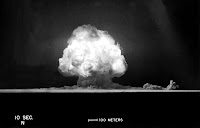
So, my questions for you, as we approach World War 2, are:

So, my questions for you, as we approach World War 2, are:
1. What should our approach to the war be? Do we look at it just as another American war which expanded our military, economic and political power across the globe? Or was there a greater purpose involved in fighting the war?
2. When do we let go of the legacy of the past? When is enough enough? Or are there some things that should never ever be forgotten? Specifics would be great for this answer
(150 word minimum, please).
(150 word minimum, please).
Article on Japan's apology for its WW2 legacy - http://www.voanews.com/english/archive/2005-08/2005-08-15-voa6.cfm
Casualties stats - http://www.reference.com/browse/wiki/World_War_II_casualties
Thursday, February 01, 2007
Movie Review extra credit
You can do a movie review of a movie made about the Great Depression: Seabiscuit or Cinderella Man.
You will be responsible for giving me the following:
1. A minimum one-page summary of the movie's plot/story including a description of the main characters.
2. Minimum 1/2 page summary of the historical elements in the movie - what historical events, people, or moments in time does this movie portray? Are these characters real, fictional? Describe the clothes, transportation, technology (yes, they do have their own version of technology - it's just Outdoor Plumbing 1.0), historical attitudes and beliefs, etc. Provide at least four specific examples with explanation.
3. Minimum 1/2 page on how this movie has expanded your historical awareness of the topic we have already studied. Make sure you describe in this section how the movie connects with an era that we have studied with specific examples from the movie.
4. Keep It or Ditch It - This is where you rate the movie on a true teenager's interest scale. After watching this movie, would this movie might have been something you would have picked out on your own to watch? Why or why not? For a school-related history movie, on a scale of one to five (one being "Good God, don't ever show that again!" to five being "I'm getting on Amazon to buy the DVD"), give a rating for the movie with an explanation.The assignment is worth a maximum of 10 points.
For my U.S. History classes, submit your review to www.mydropbox.com , use 62629 as the login and wickersham as the password.
** The password is lower case.
You will be responsible for giving me the following:
1. A minimum one-page summary of the movie's plot/story including a description of the main characters.
2. Minimum 1/2 page summary of the historical elements in the movie - what historical events, people, or moments in time does this movie portray? Are these characters real, fictional? Describe the clothes, transportation, technology (yes, they do have their own version of technology - it's just Outdoor Plumbing 1.0), historical attitudes and beliefs, etc. Provide at least four specific examples with explanation.
3. Minimum 1/2 page on how this movie has expanded your historical awareness of the topic we have already studied. Make sure you describe in this section how the movie connects with an era that we have studied with specific examples from the movie.
4. Keep It or Ditch It - This is where you rate the movie on a true teenager's interest scale. After watching this movie, would this movie might have been something you would have picked out on your own to watch? Why or why not? For a school-related history movie, on a scale of one to five (one being "Good God, don't ever show that again!" to five being "I'm getting on Amazon to buy the DVD"), give a rating for the movie with an explanation.The assignment is worth a maximum of 10 points.
For my U.S. History classes, submit your review to www.mydropbox.com , use 62629 as the login and wickersham as the password.
** The password is lower case.
Thursday, January 25, 2007
Journal #2 - Great Depression - What do we have to fear?
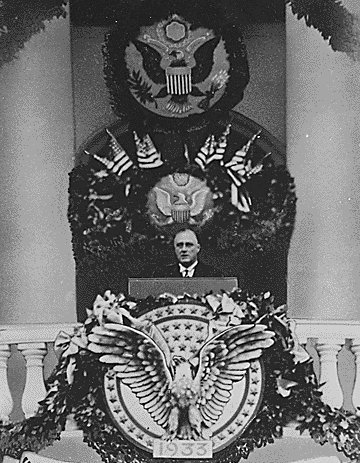
FDR's famous quote in his inaugural address "We have nothing to fear but fear itself" says a lot about this time period of doubt and economic turmoil. People were afraid for their jobs, afraid that they might be thrown out on the streets, afraid that their savings might disappear if their bank failed. All of the stuff that they had believed in about the American Dream - work hard, save money, follow the rules and you'll be rewarded - was crumbling before their eyes.
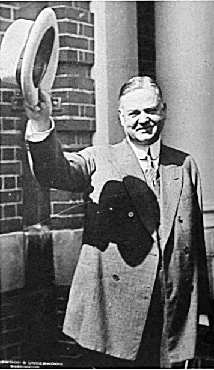
During Herbert Hoover's administration, however, President Hoover tried to reassure the nation that the economy was basically sound and that Americans needed to follow the example set by many of rugged individualism. This concept was widely accepted before the turn of the 20th century when Hoover grew up - the idea that life is a race; "[Americans] give [everyone] an equal start; we provide in the government the umpire of fairness in the race. The winner is he who shows the most conscientious training, the greatest ability, and the greatest chracter" (Hofstadter 387). Hoover followed this creed as did thousands others who became rich in the time before the Depression. The problem was, millions became poor and showed that the race was far from equal or fair. Those with the greatest ability or character did not always win.
Before you answer the question below, click on the link for Journal #2 and read the article about rich and poor in today's society. http://news.yahoo.com/s/afp/20070122/lf_afp/useconomysocialwealth
My questions for you are this:
1. Is life like a race and those who are the strongest, smartest, etc. win the race? If so, explain. If not, explain your alternative.
2. Do you think life in America is fair? Why or why not?
Please don't forget to leave your name on your comment. Thanks.
Tuesday, January 16, 2007
Journal #1 - James Baldwin quote
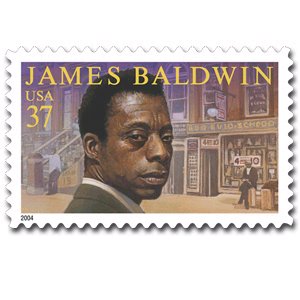
Great American writer James Baldwin wrote this about American history:
"American history is longer, larger, more various, more beautiful, and more terrible than anything anyone has ever said about it."
Question: What do you think he means by this quote (besides restating the obvious -"American history is longer, more beautiful...etc. ")? Use an example from first semester American history (or one that you're familiar with) that best captures this quote and explain why your incident/person/event applies to the quote. (minimum 200 words)
Things to think about when writing your response: try to go in depth by thinking about what has been taught or hasn't been taught about American minorities in the past. Consider how future Americans (your children and grandchildren) will look at today's history. What have you studied in the past that has really struck a nerve? Why?
Citation: James Baldwin (1924–1987), U.S. author. “A Talk To Teachers,” October 16, 1963, published in The Price of the Ticket (1985).
Thursday, January 11, 2007
Groves U.S. History Blog: Journal #9 - The Scopes Trial - One of the Trials of the Century
Groves U.S. History Blog: Journal #9 - The Scopes Trial - One of the Trials of the Century
http://www.law.umkc.edu/faculty/projects/ftrials/scopes/evolut.htm
http://www.pbs.org/wgbh/amex/monkeytrial/
http://www.scopestrial.org/
http://www.scopestrial.org/inhisimage.htm
http://www.pbs.org/wgbh/evolution/library/08/2/l_082_01.html
http://www.law.umkc.edu/faculty/projects/ftrials/scopes/evolut.htm
http://www.pbs.org/wgbh/amex/monkeytrial/
http://www.scopestrial.org/
http://www.scopestrial.org/inhisimage.htm
http://www.pbs.org/wgbh/evolution/library/08/2/l_082_01.html
Wednesday, January 03, 2007
Journal #9 - The Scopes Trial - One of the Trials of the Century
 The Scopes Trial in Dayton, Tennessee was labeled the "Trial of the Century" when it occurred in July 1925. Editors across the country called it thus b/c the case represented so much of what was going on in the 1920s:
1. Old vs. New
2. Rural vs. Urban
3. God vs. Science
4. Faith vs. Reason
5. Traditional values vs. city morals
Celebrity lawyers Clarence Darrow and William Jennings Bryan battled for eleven days with very different intentions: Darrow wanted to put the Butler Act (Tennessee's state law banning the teaching of evolution) on trial while Bryan sought to rid the world of Darwinian thought seeing World War 1 and Social Darwinism as its end result). Scopes was eventually found guilty, fined $100 (which both the ACLU and Bryan offered to pay for him). Unfortunately, five days after the trial, Bryan died in Dayton.
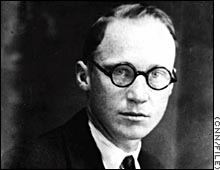
In 1926, Mississippi becomes the 2nd state to outlaw the teaching of evolution. The next year, the Tennessee state Supreme Court affirms the Butler Act but overturns Scopes conviction on a technicality. 1928, Arkansas becomes the 3rd state to ban evolution.
Eventually, Tennessee would repeal the Butler Act in 1967 but pass a law in 1973 that requires science teachers to give equal time to creation as a competing theory to the origin of man. In 1968, 1982, and 1987, the U.S. Supreme Court declares these laws banning evolution (or requiring creation to be taught) as unconstitutional. It seemed that by 1987, the debate was over.
But, it's not. According to the article I handed out, "Monkey See, Monkey Do", Intelligent Design (ID) has taken the place of creation in classrooms and school board meetings around the country. There is even a think tank university dedicated to promoting ID teaching in public schools. President Bush thinks ID should be presented as a competing theory. The only problem with ID is that there is no scientific basis for it.
A school district in Dover, Penn. was recently prohibited by a judge from teaching ID in its biology classes, and the three school board members who pushed for its inclusion in the high school curriculum were recently ousted from the board after national embarassment. See the CNN link for this case: http://www.cnn.com/2005/LAW/12/20/intelligent.design/index.html
So my question is two fold:
1. Does the teaching of creation / Intelligent Design in public schools cross the line when it comes to separation of church and state (where the government should not endorse or favor one religion -in this case the Judeo-Christian religion - over another) as specified in the 1st Amendment? Why or why not?
2. Should creation / ID be presented as a competing theory for the origin of man along with evolution in public schools? And why in the world hasn't this controversy gone away even 81 years after the Scopes Trial?
Great timeline on the Scopes Trial and Creation / Evolution controversy: http://www.npr.org/templates/story/story.php?storyId=4723956
Thursday, December 14, 2006
Extra Credit Opportunity
I am offering an opportunity for extra credit.
You can do a movie review of a movie made about a subject that we have studied so far. You will be responsible for giving me the following:
1. A minimum one-page summary of the movie's plot/story including a description of the main characters.
2. Minimum 1/2 page summary of the historical elements in the movie - what historical events, people, or moments in time does this movie portray? Are these characters real, fictional? Describe the clothes, transportation, technology (yes, they do have their own version of technology - it's just Outdoor Plumbing 1.0), historical attitudes and beliefs, etc. Provide at least four specific examples with explanation.
3. Minimum 1/2 page on how this movie has expanded your historical awareness of the topic we have already studied. Make sure you describe in this section how the movie connects with an era that we have studied with specific examples from the movie.
4. Keep It or Ditch It - This is where you rate the movie on a true teenager's interest scale. After watching this movie, would this movie might have been something you would have picked out on your own to watch? Why or why not? For a school-related history movie, on a scale of one to five (one being "Good God, don't ever show that again!" to five being "I'm getting on Amazon to buy the DVD"), give a rating for the movie with an explanation.
The assignment is worth 20 points max. Pick from the movies below.
Sommersby (1993) - Richard Gere and Jodie Foster - Reconstruction romance
Path of Glory (1957) - Kirk Douglas - World War 1
Eight Men Out (1988) - John Cusack, Charlie Sheen - Chicago White Sox Scandal
In Love and War (1996) - Chris O'Donnell and Sandra Bullock - The story of Ernest Hemingway and nurse Agnes von Kurowsky
Iron Jawed Angels
Gettysburg - (1993) - details the story of the battle of Gettysburg over the course of 4 hours
Gods and Generals (2003) - Follows the stories of Generals Lee and Stonewall Jackson between 1861-1863 of the Civil War.
The Molly Maguires (1970) - Irish immigrants and their story of the coal mines in Pennsylvania in 1876
Dances With Wolves (1990) - Kevin Costner. Mary Mcdonell, Graham Greene - Civil War soldier makes friends with Sioux tribe, but then has to choose.
Wyatt Earp (1994) - Kevin Costner, Dennis Quaid, Gene Hackman - cowboys out West and the true story of Wyatt Earp
I Will Fight No More Forever (1971) - Sam Elliot and Ned Romero - Chief Joseph's Nez Perce tribe
Andersonville (1996) - made for TV movie (TNT) about Confederate Civil War prison camp
Inherit the Wind (1960) - The Scopes trial
Far and Away (1992) - Tom Cruise and Nicole Kidman - Irish immigrants come to America
Matewan (1987) - Chris Cooper - Profiles the attempt to unionize the coal mines in West Virginia and the violence that followed.
In order to receive credit for this assignment, you must upload your assignment at www.mydropbox.com. When you first get to the website, type in the following info in the light blue boxes at the top of the webpage: Login is 62629 and the password is wickersham (all lower case). Then you will get to a Submit Your Paper page. Click the pull down menu to movie review (if that's what you've done), type in your email, your name, document title (put the movie title in it), and then either cut and paste or upload your paper from a file.
As a warning, this site will cross reference your paper with many websites on the internet and the other kids who have done this assignment in both of my classes. Two suggestions: 1. Do your own work in your own words; and 2. Don't share your work with anyone no matter who it is. You never know who they'll share it with.
You can do a movie review of a movie made about a subject that we have studied so far. You will be responsible for giving me the following:
1. A minimum one-page summary of the movie's plot/story including a description of the main characters.
2. Minimum 1/2 page summary of the historical elements in the movie - what historical events, people, or moments in time does this movie portray? Are these characters real, fictional? Describe the clothes, transportation, technology (yes, they do have their own version of technology - it's just Outdoor Plumbing 1.0), historical attitudes and beliefs, etc. Provide at least four specific examples with explanation.
3. Minimum 1/2 page on how this movie has expanded your historical awareness of the topic we have already studied. Make sure you describe in this section how the movie connects with an era that we have studied with specific examples from the movie.
4. Keep It or Ditch It - This is where you rate the movie on a true teenager's interest scale. After watching this movie, would this movie might have been something you would have picked out on your own to watch? Why or why not? For a school-related history movie, on a scale of one to five (one being "Good God, don't ever show that again!" to five being "I'm getting on Amazon to buy the DVD"), give a rating for the movie with an explanation.
The assignment is worth 20 points max. Pick from the movies below.
Sommersby (1993) - Richard Gere and Jodie Foster - Reconstruction romance
Path of Glory (1957) - Kirk Douglas - World War 1
Eight Men Out (1988) - John Cusack, Charlie Sheen - Chicago White Sox Scandal
In Love and War (1996) - Chris O'Donnell and Sandra Bullock - The story of Ernest Hemingway and nurse Agnes von Kurowsky
Iron Jawed Angels
Gettysburg - (1993) - details the story of the battle of Gettysburg over the course of 4 hours
Gods and Generals (2003) - Follows the stories of Generals Lee and Stonewall Jackson between 1861-1863 of the Civil War.
The Molly Maguires (1970) - Irish immigrants and their story of the coal mines in Pennsylvania in 1876
Dances With Wolves (1990) - Kevin Costner. Mary Mcdonell, Graham Greene - Civil War soldier makes friends with Sioux tribe, but then has to choose.
Wyatt Earp (1994) - Kevin Costner, Dennis Quaid, Gene Hackman - cowboys out West and the true story of Wyatt Earp
I Will Fight No More Forever (1971) - Sam Elliot and Ned Romero - Chief Joseph's Nez Perce tribe
Andersonville (1996) - made for TV movie (TNT) about Confederate Civil War prison camp
Inherit the Wind (1960) - The Scopes trial
Far and Away (1992) - Tom Cruise and Nicole Kidman - Irish immigrants come to America
Matewan (1987) - Chris Cooper - Profiles the attempt to unionize the coal mines in West Virginia and the violence that followed.
In order to receive credit for this assignment, you must upload your assignment at www.mydropbox.com. When you first get to the website, type in the following info in the light blue boxes at the top of the webpage: Login is 62629 and the password is wickersham (all lower case). Then you will get to a Submit Your Paper page. Click the pull down menu to movie review (if that's what you've done), type in your email, your name, document title (put the movie title in it), and then either cut and paste or upload your paper from a file.
As a warning, this site will cross reference your paper with many websites on the internet and the other kids who have done this assignment in both of my classes. Two suggestions: 1. Do your own work in your own words; and 2. Don't share your work with anyone no matter who it is. You never know who they'll share it with.
Wednesday, December 13, 2006
Journal #8 - Freedom of the Press vs. Wartime Government
I bring up the dual issues of censorship of ideas and censorship of the press during wartime because it came up during the talk on the Espionage and Sedition Acts during the Great War. Under these acts, a person can be fined up to a max of $10 grand and given a 20 year sentence for interfering with the sale of war bonds or the draft, or saying anything profane, disloyal, or abusive about the government. Obviously, these laws violate the 1st Amendment.
During wartime, there is a feeling that certain ideas may be considered dangerous, traitorous, or even downright unpatriotic. Many have been accused of such things when criticizing their government during times of war, and our history book mentions some of them. Eugene V. Debs, a Socialist Party leader and candidate for the Presidency, was sentenced to ten years in prison and fined $10,000 for "speaking out against the war and the draft" (Danzer, et. al. 392). Anarchist Emma Goldman was convicted and sentenced for creating a No Conscription League and then was deported to Russia after two years in jail.
The legal reasoning backing these cases up was set in cases like Schenck v. U.S. (1919). Eminent justice Oliver Wendell Holmes jr. stated that "the question in every case is whether the words used are used in such circumstances and are of such a nature as to create a clear and present danger that they will bring about the evils that Congress has a right to prevent." Justice Holmes went on comparing protecting free speech of the guy who yells "FIRE!" in a crowded movie theatre. Holmes implied that Mr. Schenck's wartime leaflets were that kind of clear and present danger and therefore needed to be censured. Is Justice Holmes correct when he compares the two? Or should there be freedom of expression even during times of war?
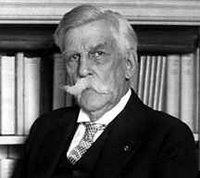
Then there's the case of the press. Should the press have access to everything as if there wasn't a war going on? What if the war had secret information? Should they publish or release the info to the public? How much censorship is too much? How much is too little?
You can pick either freedom of the press or freedom of speech, or feel free to tackle both issues. Use a specific example if you'd like. All submissions should be a minimum of 150 words (that's for you, Joe!).
During wartime, there is a feeling that certain ideas may be considered dangerous, traitorous, or even downright unpatriotic. Many have been accused of such things when criticizing their government during times of war, and our history book mentions some of them. Eugene V. Debs, a Socialist Party leader and candidate for the Presidency, was sentenced to ten years in prison and fined $10,000 for "speaking out against the war and the draft" (Danzer, et. al. 392). Anarchist Emma Goldman was convicted and sentenced for creating a No Conscription League and then was deported to Russia after two years in jail.
The legal reasoning backing these cases up was set in cases like Schenck v. U.S. (1919). Eminent justice Oliver Wendell Holmes jr. stated that "the question in every case is whether the words used are used in such circumstances and are of such a nature as to create a clear and present danger that they will bring about the evils that Congress has a right to prevent." Justice Holmes went on comparing protecting free speech of the guy who yells "FIRE!" in a crowded movie theatre. Holmes implied that Mr. Schenck's wartime leaflets were that kind of clear and present danger and therefore needed to be censured. Is Justice Holmes correct when he compares the two? Or should there be freedom of expression even during times of war?
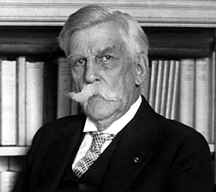
Then there's the case of the press. Should the press have access to everything as if there wasn't a war going on? What if the war had secret information? Should they publish or release the info to the public? How much censorship is too much? How much is too little?
You can pick either freedom of the press or freedom of speech, or feel free to tackle both issues. Use a specific example if you'd like. All submissions should be a minimum of 150 words (that's for you, Joe!).
Monday, December 04, 2006
Journal #7 - Can we learn from the lessons of past imperialism?
During our look at the Spanish American War and the Filipino-American War, I tried to draw some obvious parallels between the Persian Gulf War (1990-91) and the Iraq War (2003 - present) . Hasty, short wars like the Spanish American War and the Persian Gulf War were thought to be the wars of the future: short and relatively bloodless using the latest in technology. Then there's the Filipino-American War and the Iraq War: two wars fought to quell insurgencies (though intitially Iraq was about toppling Saddam). Both wars have proven to be brutal, divisive at home, and required our soldiers to do some wicked things in order to win.
Here's a quote from the Philadelphia Ledger in 1901 about the war in the Philippines:
"Our present war is no bloodless, fake...engagement. Our men have been relentless: have killed to exterminate men, women, children, prisoners and captives, active insurgents and suspected people, from lads of ten on up, an idea prevailing that the Filipino, as such, was little better than a dog, noisome reptile in some instances, whose best disposition was the rubbish heap. Our soldiers have pumped salt water into men to "make them talk," have taken prisoner people who held up their hands and peacefully surrendered, and an hour later, without an atom of evidence that they were even insurrectos, stood them on a bridge and shot them down one by one, to drop into the water below and float down as an example to those who found their bullet-ridden corpses."
Taking into account the stuff we've learned in our imperialism unit and in the imperialism debate, what kinds of lessons can we learn from American imperialism? Any one of these questions could apply for your journal.
- Is it worth the economic security to control the destinies of countries we can barely identify on the map?
- Are we sacrificing our democratic ideals when we take over other countries and pick their rulers for them? Why or why not?
- If we continue to worry about and depend upon oil in the Middle East, how will we ever develop clean energy sources that will get us off of our dependency?
- Is our dependency upon Middle East oil a security threat? Why or why not?
- When we are $8.659 trillion in the hole, how can we afford to be everywhere around the world?
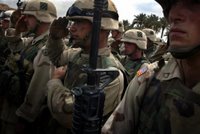
Pick a question or come up with another angle on how we can learn from our past history of over 100 years of imperialism.
Editor's Note: We didn't amass this monstrous $8.659 trillion dollar debt just on Iraq alone. It started in 1969 when we were fighting the War on Poverty and the War in Vietnam at the same time. Then, we started outspending the Soviet Union during the 1980s to win the Cold War. That didn't happen until 1991. After 1991, our government was huge and wasteful, but still provided essential services. President Clinton signed a huge tax package to begin chipping away at the national debt in 1993, and by 1999, taxes along with a booming economy helped the government start to slowly pay down some of the debt. That all changed w/ President G.W. Bush.
Plus, there is security to think about when America acts as we do. Are we acting in our own best interests for vital resources, strategic locations, and the security of the nation?
- G.W., your devil's advocate!
Here's a quote from the Philadelphia Ledger in 1901 about the war in the Philippines:
"Our present war is no bloodless, fake...engagement. Our men have been relentless: have killed to exterminate men, women, children, prisoners and captives, active insurgents and suspected people, from lads of ten on up, an idea prevailing that the Filipino, as such, was little better than a dog, noisome reptile in some instances, whose best disposition was the rubbish heap. Our soldiers have pumped salt water into men to "make them talk," have taken prisoner people who held up their hands and peacefully surrendered, and an hour later, without an atom of evidence that they were even insurrectos, stood them on a bridge and shot them down one by one, to drop into the water below and float down as an example to those who found their bullet-ridden corpses."
Taking into account the stuff we've learned in our imperialism unit and in the imperialism debate, what kinds of lessons can we learn from American imperialism? Any one of these questions could apply for your journal.
- Is it worth the economic security to control the destinies of countries we can barely identify on the map?
- Are we sacrificing our democratic ideals when we take over other countries and pick their rulers for them? Why or why not?
- If we continue to worry about and depend upon oil in the Middle East, how will we ever develop clean energy sources that will get us off of our dependency?
- Is our dependency upon Middle East oil a security threat? Why or why not?
- When we are $8.659 trillion in the hole, how can we afford to be everywhere around the world?
Pick a question or come up with another angle on how we can learn from our past history of over 100 years of imperialism.
Editor's Note: We didn't amass this monstrous $8.659 trillion dollar debt just on Iraq alone. It started in 1969 when we were fighting the War on Poverty and the War in Vietnam at the same time. Then, we started outspending the Soviet Union during the 1980s to win the Cold War. That didn't happen until 1991. After 1991, our government was huge and wasteful, but still provided essential services. President Clinton signed a huge tax package to begin chipping away at the national debt in 1993, and by 1999, taxes along with a booming economy helped the government start to slowly pay down some of the debt. That all changed w/ President G.W. Bush.
Plus, there is security to think about when America acts as we do. Are we acting in our own best interests for vital resources, strategic locations, and the security of the nation?
- G.W., your devil's advocate!
Sunday, November 19, 2006
Journal #6 - Evaluation of Teddy Roosevelt's presidency
 Teddy Roosevelt was president for almost 8 full years between 1901-1909, and he ran for a 3rd term in 1912. That election ended up with Woodrow Wilson winning with the Republican votes divided between Taft and Roosevelt. This win for Wilson seemed to signal an end to TR's career.
 During his presidency, TR felt that muckraking journalists were a danger to democracy b/c they riled up anti-government or anti-American feelings when they exposed government and business corruption. People like himself (educated, informed, those with good intentions) are the ones who should be controlling reform. Reform is better than revolution, TR believed.
These muckrakers were extremely pivotal in bringing about changes in monopolistic businesses (Standard Oil), changes in the meat and medicine industries, and in poverty and local and state government corruption. Yet, TR felt that he was the best of both worlds - reform but not radical reform.
So, my question for you is: who is right, TR or the muckrakers? Should the president lead reform or should it be the journalists? Or, do you think there should be someone else being at the forefront of business and government? Congress? Consumers? Explain your answer (in a minimum of 150 words).
Thursday, November 09, 2006
Journal #5 - Eugenics and Social Darwinism
During this unit on immigration and the growth in American cities, we looked a lot and discussed issues concerning the poor in America, both back then and now. Social Darwinism was used as a philosophy to justify the inequality between rich and poor before the 20th Century, and denying charity or help of any kind to the poor was seen as interference w/ natural law.
Eugenics became popular enough so that over 30 states had eugenics / sterilization laws on the books by 1935. According to some of the research out there, 70,000 Americans were involuntarily sterilized by 1970 for reasons like laziness, promiscuity, mental "deficencies", and the like. This way, the poor could not pass on their bad genes to their children thereby making more children. The thinking went, fewer poor people now = fewer poor children in the future.
But who gets to decide who is fit to have children and who isn't fit?
Tell me your reactions to our discussion this week about social Darwinism, eugenics, the poor, and the articles you were given. (Minimum 150 words reply please).
Feel free to discuss or react to other comments posted by students on the blog.
Eugenics became popular enough so that over 30 states had eugenics / sterilization laws on the books by 1935. According to some of the research out there, 70,000 Americans were involuntarily sterilized by 1970 for reasons like laziness, promiscuity, mental "deficencies", and the like. This way, the poor could not pass on their bad genes to their children thereby making more children. The thinking went, fewer poor people now = fewer poor children in the future.
But who gets to decide who is fit to have children and who isn't fit?
Tell me your reactions to our discussion this week about social Darwinism, eugenics, the poor, and the articles you were given. (Minimum 150 words reply please).
Feel free to discuss or react to other comments posted by students on the blog.
Sunday, October 22, 2006
Journal #4 - Should America Build a Wall At the Mexican Border?
In our next unit, we will be studying our immigration history, but specifically, we'll look at the time period of 1880s - 1924 when a huge influx of Eastern and Southern European immigrants arrived on our shores looking for work, land, the American Dream and freedom.
One question that swirls around the current immigration debate is whether or not a 700-mile wall should be built along the 1,952-mile border w/ Mexico. The House approved $2.2 billion for the wall back in December 2005 to "build a double set of steel walls with floodlights, surveillance cameras and motion detectors along one-third of the U.S.-Mexican border." 1 The Senate approved the bill shortly afterwards.
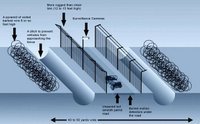 On Thursday, October 26, President Bush signed this bill into law. "Unfortunately the United States has not been in complete control of its borders for decades and therefore illegal immigration has been on the rise," Bush said at a signing ceremony. He called the fence bill "an important step in our nation's efforts to secure our borders." 3 (What's interesting to note about this Yahoo article that I quoted from here is that it can't even figure out how long the southern border of the U.S. is. One part of the article says it's a "nearly 2,000-mile border" while another part of the article refers to the "fence project covering one-third of the 2,100-mile border." Last time I checked, we haven't changed our southern border with Mexico since the Gadsden Purchase in 1853.)
So, what do you think? Does America need this wall? Why or why not? Read the articles on illegal immigration and decide before answering. Check on the links below to read some opinions. Your answer should be 150 words or more. Answer by Sunday night 10/29/06, 11:59 p.m.
1. Article from the San Fransico Chronicle: http://www.sfgate.com/cgi-bin/article.cgi?f=/c/a/2006/02/26/BORDERFENCE.TMP
2. Diagram of wall taken from website: http://www.dakotavoice.com/images/fence.jpg
3. http://news.yahoo.com/s/ap/20061026/ap_on_go_pr_wh/bush_immigration_8
One question that swirls around the current immigration debate is whether or not a 700-mile wall should be built along the 1,952-mile border w/ Mexico. The House approved $2.2 billion for the wall back in December 2005 to "build a double set of steel walls with floodlights, surveillance cameras and motion detectors along one-third of the U.S.-Mexican border." 1 The Senate approved the bill shortly afterwards.
 On Thursday, October 26, President Bush signed this bill into law. "Unfortunately the United States has not been in complete control of its borders for decades and therefore illegal immigration has been on the rise," Bush said at a signing ceremony. He called the fence bill "an important step in our nation's efforts to secure our borders." 3 (What's interesting to note about this Yahoo article that I quoted from here is that it can't even figure out how long the southern border of the U.S. is. One part of the article says it's a "nearly 2,000-mile border" while another part of the article refers to the "fence project covering one-third of the 2,100-mile border." Last time I checked, we haven't changed our southern border with Mexico since the Gadsden Purchase in 1853.)
So, what do you think? Does America need this wall? Why or why not? Read the articles on illegal immigration and decide before answering. Check on the links below to read some opinions. Your answer should be 150 words or more. Answer by Sunday night 10/29/06, 11:59 p.m.
1. Article from the San Fransico Chronicle: http://www.sfgate.com/cgi-bin/article.cgi?f=/c/a/2006/02/26/BORDERFENCE.TMP
2. Diagram of wall taken from website: http://www.dakotavoice.com/images/fence.jpg

3. http://news.yahoo.com/s/ap/20061026/ap_on_go_pr_wh/bush_immigration_8
Monday, October 16, 2006
Journal #3 - Modern Day Social Costs of Capitalism
In our unit on late 19th Century industry and unions, we're examining the social costs of unregulated capitalism and the response in unions and labor strife/conflict. In today's world, we see a shrinking manufacturing work force with American jobs going overseas, the increased costs of health care for workers (with millions not covered as well), city slums and poverty (something that hasn't changed since the late 19th Century). Corporations are also downsizing which affect white color jobs and not just manufacturing jobs.
There are several options you can choose from when considering your journal. Pick one of the following questions and answer it fully in a journal of a minimum of 150 words.
1. With jobs going overseas (outsourcing), companies say that they need to do this to compete with other companies. For instance, companies send work overseas to cut costs and see their stock price jump as a result. Critics say that these foreign workers don't pay taxes to the American government like American workers would; also, the unemployed American workers become part of the unemployment pool. They may be overqualified for entry level jobs.
http://www.jsonline.com/story/index.aspx?id=519224 - Milwaukee Journal Sentinel's business article on outsourcing and its benefits.
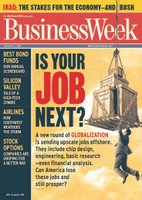
Is there a limit of jobs that American companies should be allowed to export overseas? Or do American companies need to compete with other companies and shouldn't be held back by government restrictions?
2. Products made in foreign countries by workers (some of whom are under 18) allow American companies to keep prices lower for us, the American consumer. American businesses aren't bound by U.S. child labor laws but bound by the laws of the country. Plus, U.S. companies don't have to pay American minimum wages. This is taken from www.sweatshopwatch.org:
"According to independent labor rights organizations in Hong Kong, a living wage in China would be about $0.87/hour. Minimum wage rates vary as they are set by each provincial government, however, they do not meet this living wage. Shanghai's minimum is $0.21/hour, and Guangzhou's $0.26/hour.
("Behind the Label: Made in China," March 1998, Charles Kernaghan/National Labor Committee.) "

The question is: are you willing to continue buying goods from companies that use labor like this b/c of the price? Or are you willing to buy from companies that don't employ child labor or cheap labor overseas? Why? Explain. See the flyer or see www.sweatshops.org. http://www.sweatshopwatch.org/media/pdf/sweatfree_handout05.pdf
There are several options you can choose from when considering your journal. Pick one of the following questions and answer it fully in a journal of a minimum of 150 words.
1. With jobs going overseas (outsourcing), companies say that they need to do this to compete with other companies. For instance, companies send work overseas to cut costs and see their stock price jump as a result. Critics say that these foreign workers don't pay taxes to the American government like American workers would; also, the unemployed American workers become part of the unemployment pool. They may be overqualified for entry level jobs.
http://www.jsonline.com/story/index.aspx?id=519224 - Milwaukee Journal Sentinel's business article on outsourcing and its benefits.
Is there a limit of jobs that American companies should be allowed to export overseas? Or do American companies need to compete with other companies and shouldn't be held back by government restrictions?
2. Products made in foreign countries by workers (some of whom are under 18) allow American companies to keep prices lower for us, the American consumer. American businesses aren't bound by U.S. child labor laws but bound by the laws of the country. Plus, U.S. companies don't have to pay American minimum wages. This is taken from www.sweatshopwatch.org:
"According to independent labor rights organizations in Hong Kong, a living wage in China would be about $0.87/hour. Minimum wage rates vary as they are set by each provincial government, however, they do not meet this living wage. Shanghai's minimum is $0.21/hour, and Guangzhou's $0.26/hour.
("Behind the Label: Made in China," March 1998, Charles Kernaghan/National Labor Committee.) "

The question is: are you willing to continue buying goods from companies that use labor like this b/c of the price? Or are you willing to buy from companies that don't employ child labor or cheap labor overseas? Why? Explain. See the flyer or see www.sweatshops.org. http://www.sweatshopwatch.org/media/pdf/sweatfree_handout05.pdf
Tuesday, September 19, 2006
Photo ID to vote: Good idea or bad idea?
In Congress currently is H.R. 4844, a bill that would require voters to present a photo ID at the polls in order to vote. This quote is taken from http://thomas.loc.gov/.
"To amend the National Voter Registration Act of 1993 to require any individual who desires to register or re-register to vote in an election for Federal office to provide the appropriate State election official with proof that the individual is a citizen of the United States to prevent fraud in Federal elections, and for other purposes."
Pros and cons:
1. Photo ID helps prevent voter fraud.
2. Photo ID is impractical and costly for the elderly and poor.
3. Many people already have this ID - their driver's license - so it will cost little to implement.
4. There's little evidence to suggest that such voter fraud actually exists.
5. Illegal aliens are prevented from voting by such a law.
6. Judges have recently struck down laws like these (or given injunctions to stop them) in states like Missouri http://www.kansascity.com/mld/kansascity/news/politics/15519955.htm, Georgia, Ohio, Indiana, and Arizona.
Read up on it at http://www.salon.com/news/feature/2006/09/15/voterid/index_np.html
So tell us what you think: should Americans have a photo ID to vote in federal elections? Why or why not?
"To amend the National Voter Registration Act of 1993 to require any individual who desires to register or re-register to vote in an election for Federal office to provide the appropriate State election official with proof that the individual is a citizen of the United States to prevent fraud in Federal elections, and for other purposes."
Pros and cons:
1. Photo ID helps prevent voter fraud.
2. Photo ID is impractical and costly for the elderly and poor.
3. Many people already have this ID - their driver's license - so it will cost little to implement.
4. There's little evidence to suggest that such voter fraud actually exists.
5. Illegal aliens are prevented from voting by such a law.
6. Judges have recently struck down laws like these (or given injunctions to stop them) in states like Missouri http://www.kansascity.com/mld/kansascity/news/politics/15519955.htm, Georgia, Ohio, Indiana, and Arizona.
Read up on it at http://www.salon.com/news/feature/2006/09/15/voterid/index_np.html
So tell us what you think: should Americans have a photo ID to vote in federal elections? Why or why not?
Tuesday, September 05, 2006
Journal #1 - Is Progress that separates the rich and the poor true progress?
Your job is to provide comments on the following quote:
"So long as all the increased wealth which modern progress brings goes but to build up great fortunes, to increase luxury and make sharper the contrast between the House of Have and the House of Want, progress is not real and cannot be permanent."
Henry George, Progress and Poverty. A passage from one of the most widely read American books in the 1880s, the author was highlighting the great puzzle of the era: Why did such great poverty exist at a time of such great progress and wealth? The question has been at the center of much of America's political life ever since.
A couple of questions to get you thinking for your journal response:
- Can America be a great nation w/ 15-20% of its populace living in poverty? Why or why not?
- Why do we still have these same problems of wealth disparity today that they did back in the 1880s?
- Can the solution to wealth disparity be found in the government or in businesses? Neither? Why?
- Why has America prospered so much while some other nations failed so miserably?
"So long as all the increased wealth which modern progress brings goes but to build up great fortunes, to increase luxury and make sharper the contrast between the House of Have and the House of Want, progress is not real and cannot be permanent."
Henry George, Progress and Poverty. A passage from one of the most widely read American books in the 1880s, the author was highlighting the great puzzle of the era: Why did such great poverty exist at a time of such great progress and wealth? The question has been at the center of much of America's political life ever since.
A couple of questions to get you thinking for your journal response:
- Can America be a great nation w/ 15-20% of its populace living in poverty? Why or why not?
- Why do we still have these same problems of wealth disparity today that they did back in the 1880s?
- Can the solution to wealth disparity be found in the government or in businesses? Neither? Why?
- Why has America prospered so much while some other nations failed so miserably?
Subscribe to:
Posts (Atom)