Showing posts with label 19th Century Industry. Show all posts

Friday, September 19, 2008

Blog #2 - Still Unanswered Questions?

We did a power writing session earlier this week, and in it, you were asked to write about five things you were certain of, and write down three things you were confused about concerning our unit on industry and unions in the late 19th Century. Now, I'm asking you to think once again about the stuff you're still unsure of even after taking the test on Friday.


After linking corruption in the business world today to the abuse of power back then, and contrasting moral businessmen like J.P. Morgan with modern ones like the Enron head honchos, after comparing Carnegie Steel and Standard Oil with Clear Channel's vertical and horizontal integation, what nagging question still remains? Is there something that you're not quite still clear about?


There were some great questions on the power writing. For example:
1. How could Enron look profitable for so long yet practically collapse almost over night?

2. Why do people get so greedy that they'll risk everything?
3. How is Clear Channel a monopoly if they only own 10% of the market?
4. Apple appears to be nice and friendly in their ads, but that article, at least the author, seems to really hate Apple. Why?
Your job, in Blog #2, is to pick your toughest question that still nags you and try to answer it in no less than 150 words. Due Monday, Sept. 22, 2008.

Monday, October 16, 2006

Journal #3 - Modern Day Social Costs of Capitalism

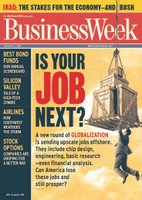
In our unit on late 19th Century industry and unions, we're examining the social costs of unregulated capitalism and the response in unions and labor strife/conflict. In today's world, we see a shrinking manufacturing work force with American jobs going overseas, the increased costs of health care for workers (with millions not covered as well), city slums and poverty (something that hasn't changed since the late 19th Century). Corporations are also downsizing which affect white color jobs and not just manufacturing jobs.

There are several options you can choose from when considering your journal. Pick one of the following questions and answer it fully in a journal of a minimum of 150 words.
1. With jobs going overseas (outsourcing), companies say that they need to do this to compete with other companies. For instance, companies send work overseas to cut costs and see their stock price jump as a result. Critics say that these foreign workers don't pay taxes to the American government like American workers would; also, the unemployed American workers become part of the unemployment pool. They may be overqualified for entry level jobs.
http://www.jsonline.com/story/index.aspx?id=519224 - Milwaukee Journal Sentinel's business article on outsourcing and its benefits.

Is there a limit of jobs that American companies should be allowed to export overseas? Or do American companies need to compete with other companies and shouldn't be held back by government restrictions?

2. Products made in foreign countries by workers (some of whom are under 18) allow American companies to keep prices lower for us, the American consumer. American businesses aren't bound by U.S. child labor laws but bound by the laws of the country. Plus, U.S. companies don't have to pay American minimum wages. This is taken from www.sweatshopwatch.org:
"According to independent labor rights organizations in Hong Kong, a living wage in China would be about $0.87/hour. Minimum wage rates vary as they are set by each provincial government, however, they do not meet this living wage. Shanghai's minimum is $0.21/hour, and Guangzhou's $0.26/hour.
("Behind the Label: Made in China," March 1998, Charles Kernaghan/National Labor Committee.) "

The question is: are you willing to continue buying goods from companies that use labor like this b/c of the price? Or are you willing to buy from companies that don't employ child labor or cheap labor overseas? Why? Explain. See the flyer or see www.sweatshops.org. http://www.sweatshopwatch.org/media/pdf/sweatfree_handout05.pdf