Showing posts with label vietnam. Show all posts

Sunday, May 16, 2010

Blog #32 - Vietnam Debate Blog

This week, we debated America's fate in 1965 - should America escalate the war in Vietnam or withdraw?  There were several nuanced options within the debate: 1. Escalate fully; 2. Escalate slowly and control the risks; 3. Withdraw slowly, negotiate and provide aid to SV; 4. Pull out completely. 

Each option stated their main points vigorously and defended them well.  When the votes came in, 2nd hour had a tie between option 2 and 3; 3rd hour had a tie between option 1 and 2.  Interestingly enough, option 4, the pull-out of Vietnam now choice, only received a couple of votes in each class (but not for lack of trying).  I don't know if this is b/c of the current wars in Iraq and Afghanistan and the backlash vs. an Iraq pullout.  But well done to all involved. 

In the film, Fog of War, that we've been watching recently, former Secretary of Defense, Robert McNamara asked the following question when reflecting thing when analyzing America's use of chemical weapons like Agent Orange on Vietnam to defoliate the jungles and make it "easier" for our soldiers to fight and win against the Viet Cong. 

"How much evil must we do in order to do good?"
Secretary of Defense Robert McNamara

A couple things to consider when answering this question:  if we're doing evil in order to do good, is that good really a good thing?  If it is a good thing, then at what point do the evil means (that you are using, for instance, Agent Orange) become so heinous that it negates the good that you are doing? 

This is an optional question to answer if you feel like tackling it for 4 extra credit points. 

On a different angle, Connecticut Attorney General Richard Blumenthal has been exposed has having misrepresented his time during the Vietnam Era as he runs for the U.S. Senate spot in this upcoming election.  http://www.nytimes.com/2010/05/18/nyregion/18blumenthal.html?src=me&ref=general  It seems that some members of the Baby Boom generation, especially those who serve in the military can't really come to terms with what they did during this time period, Mr. Blumenthal included. 

When talking to a group of veterans, he talked about the "days that I served in Vietnam" when talking supporting our troops unconditionally.  He never served and actually went out of his way to obtain five deferments so that he didn't have to serve like less fortunate soldiers who didn't go to college or have connections like Blumenthal.  His father worked with the Washington Post, and somehow young Dick received the deferment 2-A, one of the most coveted deferments, which meant that his job or role was so important that he needed to stay in the U.S..  This allowed him to finish up his Harvard grad work, go to Britain for more grad work, get a job at the Post, and then worked for the Nixon White House.  Only after the war looked like it was wrapping up did Dick join the Marine Reserves. 
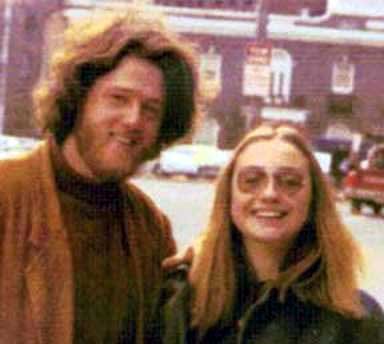
Former president Clinton went overseas during the war while on a Rhodes scholarship and protested the war in Britain, while George W. Bush spent his service time in a cushy Air National Guard post protecting the Alabama skies from Communists. 

Here's an article that examines why politicians lie about their war service: http://roomfordebate.blogs.nytimes.com/2010/05/19/politicians-and-their-fake-war-stories/?ref=nyregion  It makes for some very fascinating reading. 

Your three questions:
1. Why do you think some of the Baby Boom generation have such a difficult time with what they had done (or not done) during the Vietnam War? 
2. Which of the four options in your class (please identify 2nd or 3rd hour) argued the best case and why?  Please include specifics.
3. Why do you think the debate was set up like this (four different views, working in teams, debate, using primary resources)?  Explain. 

18 points (+4 extra if you choose to
answer McNamara's evil/good question). 

300 words minimum - due Monday, May 24, 2010

Monday, June 01, 2009

Blog #16 - Just War - WW2, Vietnam, Iraq

When we think of war, historians make a distinction between just and unjust wars. Just wars are fought by countries who hold true to principles whereas unjust wars are fought either by nations or groups w/o principles and are fought for immoral gains. This concept is as old as the Roman Empire and its great poet, Cicero, but has been also developed more thoroughly by the Catholic Church and its saints Augustine and Thomas Aquinas.


The principles of a just war include jus ad bellum, the right to go to war, and jus in bello, right conduct in war. You will see these principles fleshed out in some of the following bullets below:
  • A just war can only be waged as a last resort. All non-violent options must be exhausted before the use of force can be justified.
  • A war is just only if it is waged by a legitimate authority. Even just causes cannot be served by actions taken by individuals or groups who do not constitute an authority sanctioned by whatever the society and outsiders to the society deem legitimate.
  • A just war can only be fought to redress a wrong suffered. For example, self-defense against an armed attack is always considered to be a just cause (although the justice of the cause is not sufficient--see point #4). Further, a just war can only be fought with "right" intentions: the only permissible objective of a just war is to redress the injury.
  • A war can only be just if it is fought with a reasonable chance of success. Deaths and injury incurred in a hopeless cause are not morally justifiable.
  • The ultimate goal of a just war is to re-establish peace. More specifically, the peace established after the war must be preferable to the peace that would have prevailed if the war had not been fought.
  • The violence used in the war must be proportional to the injury suffered. States are prohibited from using force not necessary to attain the limited objective of addressing the injury suffered.
  • The weapons used in war must discriminate between combatants and non-combatants. Civilians are never permissible targets of war, and every effort must be taken to avoid killing civilians. The deaths of civilians are justified only if they are unavoidable victims of a deliberate attack on a military target. (http://www.mtholyoke.edu/acad/intrel/pol116/justwar.htm)

Using the criteria above, consider what you've read (and check out at least one of the links below to include in your response), tell me the following:


1. Was World War 2 a Just War? Why or why not? If it's not tell me where it fails by your criteria.

2. Was Vietnam a Just War? Why or why not? And finally, has Iraq and the rest of the War on Terror been a Just War? Why or why not?

Due Wednesday, June 3 - 250 words minimum. (20 points)

Go Wings!

Thoughts to consider:

NPR's analysis of Just War Doctrine only 4 months after the 9/11 terrorist attacks - http://www.npr.org/programs/morning/features/2002/jan/justwar/020125.justwar.html

Iraq a Just War from an Australian newspaper - http://www.theaustralian.news.com.au/story/0,25197,25571560-7583,00.html

Just War Theory (Internet Encyclopedia of Philosophy) - http://www.iep.utm.edu/j/justwar.htm

The Nation's take on Just War after the Afghanistan War began - http://www.thenation.com/doc/20011029/falk - "The war in Afghanistan against apocalyptic terrorism qualifies in my understanding as the first truly just war since World War II."

A great compendium on JustWar Theory info by the BBC -http://www.bbc.co.uk/ethics/war/index.shtml

Friday, May 15, 2009

Blog #15 - Do It Yourself - Pick a question and answer it!

All right. I know that you've been dying to ask some blog questions all semester long, and here are some of your fellow classmates' best inquiries into our subject matter.

Pick one and do your best to answer one of these questions that is NOT a who, what, where, or when question. These questions are more of why, how, what if types of questions. Dig deep into the personalities we've studied, try to find the issues that have bothered you or that have been sticking in your head "like a splinter in your mind."

Pick one and answer it with a minimum of 200 words. Due Monday, May 18.

1. If you lived in the 1970's what would be your reaction to when Nixon says 'If the president does it, its not illegal."? (brandon k.)

2. If America chose not to get involved in world crisis', what do you think the world would look like and why? (brandon k.)

3. During Watergate, Nixon invoked his power of executive privilege regarding his secret tapes. To what extent should a president be allowed to maintain privacy in the Oval Office? Why do you think this? (melanie e.)

4. Has our government made the right decisions in supplying energy needs to the U.S. and is our current administration directions on the right path? Why or why not? (melanie e.)


5. Was Nixon’s presidency overall considered beneficial or was it not? (Keeping in mind the Watergate scandal, the pentagon papers, giving false information to the American people, the policy on Vietnam, invasion of Cambodia etc)can his personality be judged by these incidences or it was just the power that he had making him do this? (gauri)


6. Did the policemen act in the correct or proper manner outside the convention hall in Chicago and was it justified? Was it all right for the policemen to be that harsh to the protesters who were kids? The Americans said that the guards were partially correct in what they did. How would you have reacted to this incident? (gauri, china w., )

7. If you were president and your men had perpetrated the Watergate burglary, how would you have handled it? When the news about Watergate finally surfaced, how would you have dealt with that news? (allison w.)

8. How do you think we would have dealt with the Iraq War/Conflict after the 9/11/01 terror attacks if we would have killed Saddam during the 1st Gulf War in 1991? Do you think there would have even been a second war in 2003? Explain. (johanna)

9. Considering how far America has come in the pursuit of guaranteeing civil rights today, what else do we have to further the goals of Dr. King? (sydney h.)

10. Do you think the way America is portrayed as a "free country" is accurate to how it really is? (katie r.)

11. Why has the hippie subculture become so ridiculed in today's society? (jack d.)

12. Why do you think we can't find Osama Bin Laden? Have the U.S. soldiers been trying hard enough to find him? Or has the information they've been getting so poor or bad that they can't find him? (sam s., mary s.)

13.If Michigan experienced a catastrophic natural weather event on the scale like Hurricane Katrina, do you think you and your family would stay and rebuild your life here or would your family move to another state? (sam s.)


14. Where do you think the world would be if not for Dr. Martin Luther King, how would life be different today? (alana w.)

15. How the world be different if the 9/11/01 attacks hadn't happened? Would security at airports and sporting events be as strict as it is today? Would we have gone into Iraq and Afghanistan as well? (mike m.)

16. Should the U.S. not allow foreign car makers like Honda, Isuzu and Volkswagen to sell their cars here in America? Why or why not? (thurgood)

17. What did you get out of the Frost - Nixon interviews? What do you think of Richard Nixon as a person and a president? (tyler p.)

18. How will Americans look at the Middle East after the Iraq War is over? How will Middle Easterners see America after the war? (kevin l.)

19. Do you think the U.S. government was involved in the 9/11/01 attacks? If so why? (danielle m.)

20. Who do you think did a better job handling Iraq and Saddam Hussein: George H.W. Bush (41) or George W. Bush (43)? (allison s.)

21. A lot of people seem to be overreacting about the taped recordings Nixon had of White House conversations. Do you think people made too big of a deal out of them when they learned about them in 1973 and it should have been o.k. for the president to do what he liked with them? Or do you think it was a big deal that Nixon wanted to keep the tapes? (bobby h.)

22. If there is another terrorist attack, will America (and America's government) be ready this time? Why or why not? (jacob s.)

23. What will Americans do if President Obama isn't as good as he s believed to be? (jacob s.)

24. Was splitting Germany in 2 parts the right thing to do after WW2 considering all of the problems of the Cold War? (china w.)

25. Do you think the Supreme Court was right in overruling Nixon's executive privilege argument about the WH tapes? Why or why not? (andrew s.)

26. Do you think President Reagan came up with SDI for the protection of America or was there another reason? Why? (ryan s.)

27. In your opinion, should Nixon have ever been put in prison? Why or why not? Or was pardoning him the right thing to do? (tyler d.)

28. If you were president during the Vietnam War, what would you have done differently than presidents Kennedy, Johnson and Nixon? (matt t.)

29. If you were in Rosa Parks' shoes, what would you have done? (evan f.)

30. Which has been more devastating for the United States: Vietnam or Iraq? Why? (kyle d.)

31. When do you think the war on terror will end? Why? (kyle d.)

32. Should President George H.W. Bush (41) gone into Baghdad when he had the chance back in 1991 and killed Hussein when he had the chance? Why or why not? Do you think that would have solved things that we're seeing in Iraq today or would we still be there? (tim t.)

33. In the movie, Frost/Nixon, why do you think Nixon seemed so unprepared or out of it in the final Watergate interview? (eric b.)

Due Monday, May 18.

Tuesday, April 28, 2009

Blog #13 - Tie it all together

Since we're doing history backwards, I want you to think about tying up any loose ends that you might have hanging since we're just past the halfway point in the semester.

There are a couple of things I'd like you to think about as you write blog #13:


1. Pick at least two areas / time periods - economics, energy, terrorism, Cold War, foreign policy, etc. - that we have studied and explain how the recent past(last forty years) has influenced current events within the past ten years or so (for instance, how has the Vietnam War impacted the way American Presidents have planned for future military engagements like the first Gulf War, Somalia, and the Iraq War). Be specific with your two examples as you trace the development of a theme or an idea through time and show how it has developed over time;

2. Evaluate your two time periods and the themes involved and explain why you think these have improved, stagnated, or devolved. For instance, has America learned its lessons from Vietnam? Why or why not?

300 words minimum. Due Monday, May 4 (25 points).

Thursday, May 01, 2008

Blog #21 - Do It Yourself, Part 2

Pick one of the following blogs and give a full, detailed and well-thought out answer. As usual, you can't pick your own, and your answer must be a minimum of 150 words.

1. Do you think that the U.S. would have been any safer w/o fighting the Vietnam War? Was it really worth it? Why or why not? - Lorne, Ben, Ryan B., Bethany, Jourdan, Tyler, Megan W., Jason S.,

2. When public support is so low for a war (Vietnam / Iraq), why did/do we continue to fight that war? - Ally R.

3. With many of the same characteristics as the Vietnam War, do you think that the Iraq War will end the same way or differently? Why? - Christy, Ben, Kelsey, TJ, Robbie L., Alex D., Matt Ba.,

4. Why doesn't the media show us the reality of wars? Should they show us the reality of what's going on in Iraq? - Emily C., Nicole, Michael G., Jessica,

5. How would life (our future) be different today if there was a draft like in Vietnam? Would you enlist, skip out on the draft, or allow yourself to be drafted? Why? - Trevor, Andrew, Claire, Derek M., TJ, Mollie,

6. Do you think it is disloyalty to America if the citizens don't support the troops who are fighting the war? Why or why not? - Raekeshia

7. Do you think the chemical nicknamed Agent Orange was appropriate to use considering the destruction and casualties? Why or why not? - Ian, Fred,

8. Do you think President George H.W. Bush should have gone after Saddam Hussein and his army after freeing Kuwait in 1991? Why or why not? - Rob G., Bethany, TJ, Emma,

9. With over 4,000 soldiers killed and 30,000+ injured from the war in Iraq, besides pulling out the troops, what other solutions are there to stop more Americans from being killed in Iraq? Is there another alternative to pulling out of Iraq? - Angelina

10. If you were on the grand jury in the Kent State shooting case, how would you have voted? Why? - Sarah

11. Given that there are so many similarities between the Vietnam and Iraq wars, why haven't our leaders learned from history? How would you do things differently if you were president? - Sarah, Amber, Jacob T., Jessica,

12. How do you feel about our current foreign policy: do you feel our priorities are out of whack or should we be able to look out for ourselves first? Is there another alternative? - Alexandra, Jacob T.,

13. Should Secretary of Defense Robert McNamara have spoken up sooner about our misguided Vietnam policy than he did? - Paul, Matt Ba., Jessica,

14. Would you have been a protester during the Vietnam War? Why or why not? - Marin, Nikita, Tyler H., Jason S., Megan W.,

15. Do you think the student protests influenced America's decision to leave Vietnam? Why or why not? - Stefan

16. Why didn't more nations support us when we went into the Persian Gulf the second time in 2003? - Stefan

17. Should the American people be able to vote against the President's decisions during war time? Why or why not? - Rob S.,

18. Who was to blame for the Kent State shootings: the National Guard, the students, or someone else? What other ways could this have been handled? - numerous students

19.

Friday, April 25, 2008

Blog #20 - Is it treason to protest a war while it's going on?

During the Vietnam War, student protests played a small but pivotal role in turning public opinion against America's involvement in South Vietnam. Many groups formed to protest the war - groups like the Yippies, The Weather Underground, and Students for a Democratic Society. Yet, 70% of Americans felt that protests in Dec. 1967 were "acts of disloyalty." There's the thinking that the country should rally around the President during war time - no matter what. After the Tet Offensive, opinions on the war turned against it, and so did opinions of the President - both Johnson and Nixon.
In Washington D.C. in November 1969 and and April 1971, over 1/2 million people showed up to protest the war. After the Kent State shootings on May 4, 1970, more average Americans began protesting the war:

"Many labor leaders spoke out for the first time, and blue-collar workers joined antiwar activities in unprecedented numbers. However, construction workers in New York assaulted a group of peaceful student demonstrators, and (with White House assistance) some union leaders organized pro-administration rallies." 2
A recent article from Common Dreams compared the two anti-war movements.

"America's current anti-war movement is resourceful and persistent, but often seems to lack the vibrancy of its counterpart in the Vietnam era when protesters burned draft cards, occupied buildings and even tried to levitate the Pentagon.

A lot of the opposition to Vietnam was motivated by people's fear of going to war - maybe it was pretty self-centered. With this movement, maybe it's not as big, but it comes from a deeper place than 'Hell No, We Won't Go.'

"We're not as unified, not as hard-core, not as big," said Frida Berrigan, 32, a board member of the War Resisters League and daughter of the late peace activist Philip Berrigan. "There's a reason there's not a draft."

"During Vietnam, the perception was that atrocities were everywhere - the military was looked down on," he said. "There is a serious effort now not to stigmatize the military - a conscious effort to say, 'This is not a bunch of baby-killers.'" 1
After the Iraq war began, criticism was somewhat muted, but there were worldwide protests in the hundreds of thousands. By August 2004, almost 500,000 rallied in NYC at the Republican National Convention where President Bush accepted his nomination to run for the presidency again.

Since 2003, there have been sporadic protests, including Michael Moore's infamous blasting of President Bush at the Oscars after winning the award for Bowling for Columbine.
So, what do you think?
Is protesting a war during war time a treasonous offense? Is it an act of disloyalty? Why or why not?
Things to think about: what exactly should be allowed as a protest? Everything? Marches, letters to the editor, sit-ins, etc.? Would you go as far as burning an American flag? What if the draft was reinstated? People were jailed during World War I for speeches (Eugene Debs) and passing out pamplets that called for an end to the war and the draft.
Due Monday, April 28th - minimum of 200 words.
Sources:

Monday, February 11, 2008

Journal #13B - 40 different ways to look at JFK

After reading and listening to the different views of President Kennedy's life as seen through different biographers' eyes, it's time for your opinion/assessment.

John Kennedy's biographers are usually broken into two groups: one group works to reinforce the image of Kennedy as icon, as the ideal president. They tend to gloss over the difficult stuff in his life with the idea that it's not important to know that kind of info about him. These biographers also stress his good qualities and downplay his bad qualities.

The second group of biographers are iconoclasts; they are trying to poke holes in the JFK myth by finding evidence to refute many of the cherished (and false) stories about the Kennedy family, clan, and presidency. These biographers are like realist authors - they give you the gritty details of a person's life; the fact that this person was the president doesn't seem to phase them.

The American people have consistently voted JFK (along with Lincoln) as their greatest American President, yet historians have given him the title "Most Overrated" in American Heritage magazine. When looking at his Congressional record, he didn't do much. Almost the same thing can be said for his Presidential record; how significant were the Peace Corps and the race to the moon in the long run?

Your job: answer the following questions:
1. Share your assessment of the man and his job as president by looking back at your notes on the 8 sections of the book. Explain your reasoning with specific examples.
2. Where should biographers draw the line on their subjects? How much is too much and how little is too little?It really boils down to what the main job of a biographer is.

250 words minimum. -Due Wednesday - 2/13/08

http://www.maryferrell.org/wiki/index.php/Main_Page - Great link to a tribute website to a JFK archivist, Mary Ferrell.

Friday, June 01, 2007

What did you like about Forrest Gump?


Forrest Gump was an interesting movie and despite the fact we only saw part of it, we still gained some good insight from it. Obviously casting Tom Hanks as Forrest was an excellent choice because he portrayed the character very well. I think overall the movie (or the parts of it we saw) did a good job of putting Vietnam in a neutral light without tainting it, from an objective point of view.

My questions are:

1. Do you think the movie accurately portrayed the war and the situations (setting aside the fact we know it was filmed in Georgia)?

2. What could they have done better to make it more realistic?

3. What do you think of the part where Lieutenant Dan pulls him on the floor and he accuses him of taking away his destiny? Was it his destiny? Should Forrest have left him there to die?


Jill M. -6th Hour

Tuesday, May 29, 2007

Norman Morrison - Fog Of War

Norman Morrison was a Quaker who did not believe in violence and was anti-war. In protest, he went to the Pentagon and set himself on fire. He was holding his young daughter while doing it. Finally people convinced him to throw his daughter out of the fire. She lived, but Norman didn’t. When I heard this story I was shocked. I couldn’t believe that someone would set himself on fire due to his beliefs.

Do you think your life is worth something you believe in? Are you willing to give your life for your beliefs? Do you think what Norman Morrison did was wrong or did he make a statement?

Hannah

Website on Morrison's protest: http://www.angelfire.com/nb/protest/morr.html
An article written about Morrison's wife: http://www.sojo.net/index.cfm?action=magazine.article&issue=soj9507&article=950752

Questions about Kent State

A few weeks ago we read an article about the Kent State tragedy. Four students were killed and 9 were injured. In the article, "Tragedy at Kent State", it says that the troops were outnumbered and out of tear gas. It also said that they "acted without specific order but did have discretionary authority to return fire." The article said that some believed the troops were responding to sniper fire, but there was no evidence of a sniper ever found.

Why do you think the troops fired into the crowd then? What was their reasoning? Were they scared and just acting on impulse?

Claire M. - 5th Hour

Website devoted to pics and documents from Kent State: http://speccoll.library.kent.edu/4may70/may4cont.html

How would things have been different if we hadn't gone to Vietnam?

The Vietnam War caused a lot of trouble to America. We lost many lives not only fighting in Vietnam but also in protests back home for example the protest at Kent University. In this war chemicals were used and such as Agent Orange. As a result to exposure to Agent Orange many people came back with health problems. People became suspicious of the government. The government lied to the public about what was happening in Vietnam. News reporters were daily contradicting what the government told American about the war.

If we wouldn’t have entered this war, would we not have had these problems? Since we didn’t achieve or win the war, was it even worth entering in the first place? Would the outcome be any different (Communism taking over the entire country) if the United States hadn’t been there?

Allison

Thursday, May 24, 2007

What would you do know if there was a draft?

When we took notes on the movie, Vietnam: A Television History, "Nixon's Inauguration" and when we discussed it with the class. I found it interesting that men when they were drafted tried to have deferments. There were two kinds of deferements: medical ones and the ones that were for students. If you were a man attending a college or university which usually was the rich or upper class, those that could afford it. Basically the upper class could afford to go to college, and the middle class/lower class would be forced into the draft. Some men forced medical problems on themselves like the example from the move: a man (writer James Fallows) tried to lose 10 lbs in 2 weeks so that he would fail his physical, and therefore not be forced into the draft.


Then according to our notes "Ways that the Iraq War is the same/different as/ than the Vietnam War" worksheet, it says that "no one has been prosecuted for failure to comply with draft registration since 1986....". If there was a draft now in the Iraq war, not just for men but for women also, due to the women's right movements, women would also be able to be drafted.

What do you think you would do: go through with being drafted not knowing what will happen to you? Or would you try to get some kind of deferment?

Alexandra S. - 5th Hr.

Monday, May 21, 2007

How alike are Iraq and Vietnam? Andy sounds off

In some ways, the Iraq war is like the Vietnam war. Both Presidents Bush and Kennedy went to war and ended up getting negative feedback after they went. Both said that they would stay in the country as long as it took. Both claimed they were fighting terror.

Why is it that the Vietnam war is viewed as a success yet the Iraq war is looked at as a failure?

Andy R.

Sunday, May 20, 2007

Vietnam: Why did we lose?

The Vietnam War was the only war that America has lost. What do you think are some of the reasons why we lost this war? Also with the U.S. being very industrialized and wealthy why didn’t these qualities help us win the war?

Brandi B. - 5th Hour

Thursday, May 17, 2007

Domino Theory

As questioned in the movie, what would happen if Vietnam fell to the communists?, a “domino effect” of communism would spread to other countries. This would mean that the two largest countries in Eurasia, China and Russia would turn the other countries around communist as well.
As seen in this image, communism would then turn to Vietnam followed by Cambodia, Laos, Thailand, etc. Now, my question is:
If communism spread to the other countries, how do you think the United States would handle the situation?
If communism spread to the other countries, do you think these countries would still be communist today?

Evie C.

Is there a right way to protest?

I thought the article "Tragedy at Kent State" was very interesting. I don't agree with what the student did by torching the building, but why were they so angry? Was it because people they knew in the army were dying or were they just anti-war? What didn't the students agree with about President Nixon's decision? The student didn't start the protest off to good, but when they tried to end it peacefully was when things got out of hand. Student voiced there opinions (peacefully) during the rally which they had the right to do, so why did things end the way they did? I don't understand why all charges against the troops were dropped, the state giving the families and students money doesn't make up for the lives they lost and injuries they dealt with. I think there should be better ways to end or control situations like this. Without using violence, what is the best way to handle a group of protestors?
Shayna S.

Wednesday, April 04, 2007

Journal #6 - 40 Ways to Look at JFK

After reading and listening to the different views of President Kennedy's life as seen through different biographers' eyes, it's time for your opinion/assessment.

John Kennedy's biographers are usually broken into two groups: one group works to reinforce the image of Kennedy as icon, as the ideal president. They tend to gloss over the difficult stuff in his life with the idea that it's not important to know that kind of info about him. These biographers also stress his good qualities and downplay his bad qualities.

The second group of biographers are iconoclasts; they are trying to poke holes in the JFK myth by finding evidence to refute many of the cherished (and false) stories about the Kennedy family, clan, and presidency. These biographers are like realist authors - they give you the gritty details of a person's life; the fact that this person was the president doesn't seem to phase them.

The American people have consistently voted JFK (along with Lincoln) as their greatest American President, yet historians have given him the title "Most Overrated" in American Heritage magazine. When looking at his Congressional record, he didn't do much. Almost the same thing can be said for his Presidential record; how significant were the Peace Corps and the race to the moon in the long run?

Your job: answer the following questions
1. Share your assessment of the man and his job as president by looking back at your notes on the 9 sections of the book. Explain your reasoning with specific examples.
2. Where should biographers draw the line on their subjects? How much is too much and how little is too little?
It really boils down to what the main job of a biographer is. 250 words minimum.
http://www.maryferrell.org/wiki/index.php/Main_Page
Great link to a tribute website to a JFK archivist, Mary Ferrell.