Showing posts with label draft. Show all posts

Friday, April 24, 2009

Blog #12 - Pick one of the 2 questions -

Pick one of the following questions below:

All week we have been talking about comparisons between the Vietnam War and the Iraq War. One of the issues has been about chemical weapons:

1. Agent Orange was used to destroy the foliage of Vietnam - 30% of the country - an area about the size of Massachusetts. Also, napalm was used to destroy and burn down the same jungles made almost 3 million Vietnamese refugees. AO caused cancer in American veterans and Vietnamese civilians as well as birth defects in their children.

- So my question for you (if you choose this one) is: is the use of chemical weapons ever appropriate? Does it depend on what kind and why they're used? Why?


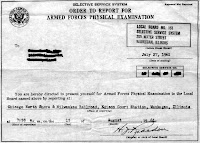
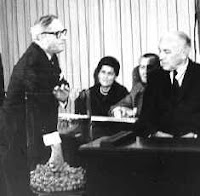
2. The draft was used during the Civil War, WW1, WW2 and all the way through Vietnam. When enough volunteers weren't found, the government had to come through with a draft. Since the Iraq War began in 2003, a couple of Congressmen wrote a bill calling for an equitable draft that would eliminate many of the Vietnam-era inequalities (college, medical, deferments, Canada, National Guard, etc.) and included men and women.

- Question - Would you fight in the Iraq War if you were drafted? Why or why not? Are there any conditions under which you would / wouldn't fight if drafted? Explain .


200 words minimum. Due Tuesday, April 28, 2009.

Sunday, January 06, 2008

Blog #9B - Would you fight if drafted?

As the American military has been stretched thinner and thinner by our commitments in Afghanistan and Iraq in the past six years plus the falling retention rate of soldiers, talk of reinstating a draft has continued to come up. This talk of a draft is like that dandelion in your yard that just won't go away.

In 2003, on the eve of war with Iraq, a bill was introduced in Congress that called for reinstating the draft but with much fairer provisions than the one that was ended in the mid 1970s used to fight the Vietnam War. Back then, the poor and minorities were drafted much more often than wealthy white males who had connections and could use them to get out of the draft (Bill Clinton), or get nice national guard duty (George W. Bush, former V.P. Dan Quayle), or get medical deferments (Dick Cheney). Many other wealthy people got to use college deferments as a way to get out of the draft.

This new bill introduced in 2003 would supposedly eliminate all of these deferments and make it harder for American citizens to move to and live in Canada to evade the draft. The bill called for 2 years of service to the American government for both men and women between the ages of 18-26. The bill sat in committee for over a year and a half and then was finally voted down overwhelmingly (402-2 in the House on HR 163) a month before the 2004 election. Gee, what a surprise!
During the time period we're studying, World War 2, the U.S. also needed a draft to supply the soldiers to fight fascism. According to our textbook, 5 million men volunteered for the war, and the draft was expanded to include another 10 million.
Currently, there is no draft. According to this CBS News article that I found, http://www.cbsnews.com/stories/2006/12/22/national/main2291979.shtml, sometime in the near future (before 2009 - the story was published Dec. 22, 2006) the government will test the Selective Service System which hasn't been tested since 1998. But, as evidenced by General Lute's testimony here, some people still think it's a good idea.
So, my questions for you are:

1. If drafted when you're old enough to fight in the war on terror, would you fight? Why or why not? Would it depend on the situation or is it important that you answer the call when your country needs you? Why?

2. If you had lived during World War 2 times and the Japanese had just bombed Pearl Harbor (and you're of draft age), BOYS - would you have volunteered or waited to have been drafted? Explain your answer.

GIRLS - Would you have supported your father's/brother's/ boyfriend's/husband's choice to volunteer for the war or would you have encouraged him to wait? Why?

(100 words minimum for each question - 1 and 2 - is fine).

Before you answer, you may want to read this pro/con piece from a couple of veterans at Georgia Tech University. http://www.cc.gatech.edu/~tpilsch/History/Reinstate.html Both of them bring up some very valid points for and against a draft.

Sources:
1. June 2007, Bush War Advisor Says Draft Worth A Look. http://www.commondreams.org/archive/2007/08/11/3117/
2. Dec. 22, 2006, Military Draft System to be Tested.

Tuesday, November 06, 2007

Blog #7 - Free Speech During War - Allow It or Suppress It?

During the Great War, the United States went to great lengths to stop people from expressing their views on the war and the draft. Historian Howard Zinn has written at length that part of this suppression was done to keep Americans from expressing their anti-war sentiments/feelings:
  • Why should we get into a war that we have no interests in? This is only about European colonialists, not U.S. interests...

  • Why should I be drafted to go protect France or Belgium? (only 73,000 volunteered in the first 6 weeks after Wilson declared war on Germany in April 1917);

  • Why should we spend millions and millions of our tax money to do this?

  • Why should we join a war that current French soldiers are beginning to mutiny against?

  • Why should we break away from our tradition of isolationism? It's served us well for this long....

So Wilson and Congress together got tough on this kind of talk and anti-draft interference w/ the Espionage Act of 1917 and the Sedition Act of 1918. The Supreme Court affirmed that we do NOT have the right to free speech as long as it creates a "clear and present danger" much like yelling "FIRE!" in a crowded theatre.

A speech like this one by Eugene Debs is the kind of thing that got him in trouble and thrown in the big house:

"Wars throughout history have been waged for conquest and plunder. ...the
working class who fight all the battles, the working class who make the supreme
sacrifices, the working class who freely shed their blood and furnish their
corpses, have never yet had a voice in either declaring war or making peace. It
is the ruling class that invariably does both. They alone declare war and they
alone make peace. They are continually talking about their
patriotic duty
. It is not their but your patriotic duty that
they are concerned about
. There is a decided difference. Their
patriotic duty never takes them to the firing line or chucks them into the
trenches." (emphasis added)

*Debs was sentenced to jail for this speech and while in jail ran for President under the Socialist Party for which he received almost one million votes in 1920!

But my question still remains: is questioning what your country does during a war o.k.? Should asking questions about how the war is conducted, about the tactics being used (torture, waterboarding, etc.), about how the goals are being met (or if they're being met at all), or is it all worth the sacrifice of all the young men and women's lives?? Is this line of questioning during war time o.k. or does it make you unpatriotic? Why?

Minimum of 200 word response - due Wednesday, November 14th.

Thursday, May 24, 2007

What would you do know if there was a draft?

When we took notes on the movie, Vietnam: A Television History, "Nixon's Inauguration" and when we discussed it with the class. I found it interesting that men when they were drafted tried to have deferments. There were two kinds of deferements: medical ones and the ones that were for students. If you were a man attending a college or university which usually was the rich or upper class, those that could afford it. Basically the upper class could afford to go to college, and the middle class/lower class would be forced into the draft. Some men forced medical problems on themselves like the example from the move: a man (writer James Fallows) tried to lose 10 lbs in 2 weeks so that he would fail his physical, and therefore not be forced into the draft.


Then according to our notes "Ways that the Iraq War is the same/different as/ than the Vietnam War" worksheet, it says that "no one has been prosecuted for failure to comply with draft registration since 1986....". If there was a draft now in the Iraq war, not just for men but for women also, due to the women's right movements, women would also be able to be drafted.

What do you think you would do: go through with being drafted not knowing what will happen to you? Or would you try to get some kind of deferment?

Alexandra S. - 5th Hr.