Showing posts with label American Dream. Show all posts

Friday, November 14, 2008

Completed Questions for Articles on Economic Turmoil

Please read instructions first:
I wanted to get you started with these first two articles tonight. You will not have to answer all of these questions, just some of them. The red, bold questions are required, and after I'm finished with the last two articles, I'll give you a total # on how many you have to answer.


**Please make sure that you do your own, independent work. I will be providing some vocabulary words and additional explanation for the articles.

“The End of Prosperity?” by Niall Ferguson.
1. What has been happening to the U.S. housing market since 2007?
2. How many homeowners might lose their homes, according to worst case scenarios?
3. Why are banks and other financial institutions in bigger trouble?
4. How does the “drastic reduction of credit” affect smaller companies like the car dealer example?
The Historical Parallels
5. What happened to the stock market in the 3 years after the crash of 1929?
6. How did the stock market react on Sept. 29 (2008) after Congress initially rejected the bailout?
7. What does Milton Friedman and Anna Schwartz’s book say is the cause of the Great Depression?
Why Depression 2.0 Can Still Be Avoided
8. How has current Federal Reserve Chairman Ben Bernanke tried to keep from repeating past mistakes?
9. Give 2 examples of how America’s economic turmoil has gone global.


“11 Questions About the $700 Billion” by Justin Fox and the section at the bottom of the page called “Need a Loan?”
11 Questions
10. Who gets the $700 billion?
11. Why is it a problem if more than one leveraged financial institution (banks, investment banks, etc.) collapses?
12. Will the government get all of its money back? Why or why not?
13. Who does Fox blame for the crisis?
Need a Loan?
14. What is the biggest hurdle in getting a mortgage now?
15. How are credit card companies changing their strategies?
16. How does the credit crunch affect student loans?

“How They Failed Us” by Michael Grunwald.
17. Why do many people not trust both parties in government, according to the author of the article? Provide at least two specific examples.
18. How did both Senator Obama and Senator McCain react/deal with the negotiations over the bailout plan?
The Credibility Gap - required: pick one of the following four questions
19. Why is it surprising to see House Republicans vote against the bailout bill and break with President Bush?
20. Why wasn’t the bailout plan popular with liberals or conservatives?
21. How did the Bush administration fail to “sell” their plan to the American public?
22. Why did the opposition to the bailout change practically overnight?

"Death By Rescue" by Donald Luskin - required: pick one of the following five questions
I'm From the Government, and I'm Here to Help
23. What does the article list as possible causes for the collapse of the financial markets in the past few months?
24. With the Bear Stearns bank bailout in March 2008, the Federal Reserve negotiated its sale to a competitor (JP Morgan bank) on a Sunday night when the stock market wasn’t open for business. Why does this kind of deal only make it attractive for other helpless banks to find a good deal and not have to face the consequences?
Falling One By One
25. What is your reaction to the government allowing competing mega-banks to buy each other out for below-market value that the company is worth while the government uses taxpayers’ money to pay for the sale?

I thought of it this way:

That would be like the government allowing McDonalds to buy Burger King for 1/10
its value as a company and then allowing McDonalds to use tax dollars to pay for
the sale. The rationale is that if Burger King goes out of business, the
jobs lost will damage the economy and all of the shareholders invested in Burger
King will lose money. And what about the companies that sell BK their
hamburger, buns, potatoes and pop? All those companies could be hurt too,
so the best thing to do, of course, is to let McDonalds buy BK. And
McDonalds will pay the U.S. government back if it ever makes a profit on any of
this. What’s that, you ask? What about all of those competing stores
right next to each other? Well, you can leave them up and keep selling the
same product, but if a McDonalds is losing to a BK somewhere, that BK is
probably gonna have to close down and those folks will be thrown out of
work. Wait! Isn’t that what we’re trying to avoid? Yep.
So….


Urgency, Then Inaction
26. Doesn’t it make you wonder what’s really going on when written into the $700 billion bailout law are specific instructions about “provisions related to film and television productions” and an “exemption from excise tax for certain wooden arrows designed for use by children” but little specifics on where the $700 billion should be spent? Why or why not?
27. Why does the author believe that the $250 billion in bailout money used in October 2008 was the best way to use that money?

Thursday, January 25, 2007

Journal #2 - Great Depression - What do we have to fear?


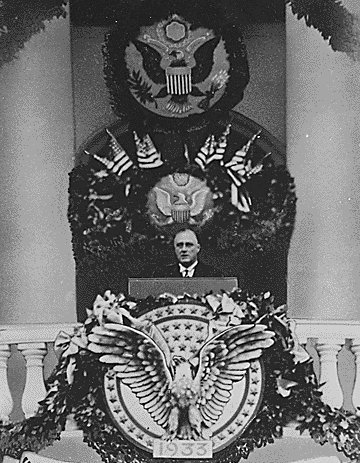
FDR's famous quote in his inaugural address "We have nothing to fear but fear itself" says a lot about this time period of doubt and economic turmoil. People were afraid for their jobs, afraid that they might be thrown out on the streets, afraid that their savings might disappear if their bank failed. All of the stuff that they had believed in about the American Dream - work hard, save money, follow the rules and you'll be rewarded - was crumbling before their eyes.

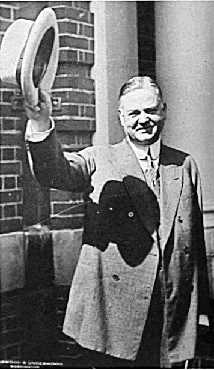
During Herbert Hoover's administration, however, President Hoover tried to reassure the nation that the economy was basically sound and that Americans needed to follow the example set by many of rugged individualism. This concept was widely accepted before the turn of the 20th century when Hoover grew up - the idea that life is a race; "[Americans] give [everyone] an equal start; we provide in the government the umpire of fairness in the race. The winner is he who shows the most conscientious training, the greatest ability, and the greatest chracter" (Hofstadter 387). Hoover followed this creed as did thousands others who became rich in the time before the Depression. The problem was, millions became poor and showed that the race was far from equal or fair. Those with the greatest ability or character did not always win.

Before you answer the question below, click on the link for Journal #2 and read the article about rich and poor in today's society. http://news.yahoo.com/s/afp/20070122/lf_afp/useconomysocialwealth

My questions for you are this:
1. Is life like a race and those who are the strongest, smartest, etc. win the race? If so, explain. If not, explain your alternative.
2. Do you think life in America is fair? Why or why not?

Please don't forget to leave your name on your comment. Thanks.

Tuesday, January 16, 2007

Journal #1 - James Baldwin quote


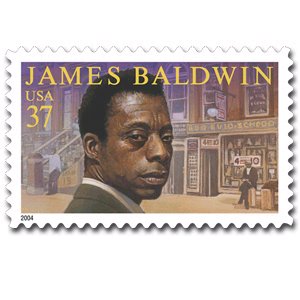
Great American writer James Baldwin wrote this about American history:

"American history is longer, larger, more various, more beautiful, and more terrible than anything anyone has ever said about it."

Question: What do you think he means by this quote (besides restating the obvious -"American history is longer, more beautiful...etc. ")? Use an example from first semester American history (or one that you're familiar with) that best captures this quote and explain why your incident/person/event applies to the quote. (minimum 200 words)

Things to think about when writing your response: try to go in depth by thinking about what has been taught or hasn't been taught about American minorities in the past. Consider how future Americans (your children and grandchildren) will look at today's history. What have you studied in the past that has really struck a nerve? Why?

Citation: James Baldwin (1924–1987), U.S. author. “A Talk To Teachers,” October 16, 1963, published in The Price of the Ticket (1985).

Sunday, October 22, 2006

Journal #4 - Should America Build a Wall At the Mexican Border?

In our next unit, we will be studying our immigration history, but specifically, we'll look at the time period of 1880s - 1924 when a huge influx of Eastern and Southern European immigrants arrived on our shores looking for work, land, the American Dream and freedom.

One question that swirls around the current immigration debate is whether or not a 700-mile wall should be built along the 1,952-mile border w/ Mexico. The House approved $2.2 billion for the wall back in December 2005 to "build a double set of steel walls with floodlights, surveillance cameras and motion detectors along one-third of the U.S.-Mexican border." 1 The Senate approved the bill shortly afterwards.

On Thursday, October 26, President Bush signed this bill into law. "Unfortunately the United States has not been in complete control of its borders for decades and therefore illegal immigration has been on the rise," Bush said at a signing ceremony. He called the fence bill "an important step in our nation's efforts to secure our borders." 3 (What's interesting to note about this Yahoo article that I quoted from here is that it can't even figure out how long the southern border of the U.S. is. One part of the article says it's a "nearly 2,000-mile border" while another part of the article refers to the "fence project covering one-third of the 2,100-mile border." Last time I checked, we haven't changed our southern border with Mexico since the Gadsden Purchase in 1853.)

So, what do you think? Does America need this wall? Why or why not? Read the articles on illegal immigration and decide before answering. Check on the links below to read some opinions. Your answer should be 150 words or more. Answer by Sunday night 10/29/06, 11:59 p.m.

1. Article from the San Fransico Chronicle: http://www.sfgate.com/cgi-bin/article.cgi?f=/c/a/2006/02/26/BORDERFENCE.TMP

2. Diagram of wall taken from website: http://www.dakotavoice.com/images/fence.jpg

3. http://news.yahoo.com/s/ap/20061026/ap_on_go_pr_wh/bush_immigration_8

Monday, October 16, 2006

Journal #3 - Modern Day Social Costs of Capitalism

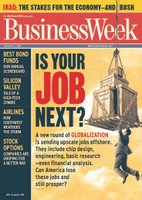
In our unit on late 19th Century industry and unions, we're examining the social costs of unregulated capitalism and the response in unions and labor strife/conflict. In today's world, we see a shrinking manufacturing work force with American jobs going overseas, the increased costs of health care for workers (with millions not covered as well), city slums and poverty (something that hasn't changed since the late 19th Century). Corporations are also downsizing which affect white color jobs and not just manufacturing jobs.

There are several options you can choose from when considering your journal. Pick one of the following questions and answer it fully in a journal of a minimum of 150 words.
1. With jobs going overseas (outsourcing), companies say that they need to do this to compete with other companies. For instance, companies send work overseas to cut costs and see their stock price jump as a result. Critics say that these foreign workers don't pay taxes to the American government like American workers would; also, the unemployed American workers become part of the unemployment pool. They may be overqualified for entry level jobs.
http://www.jsonline.com/story/index.aspx?id=519224 - Milwaukee Journal Sentinel's business article on outsourcing and its benefits.

Is there a limit of jobs that American companies should be allowed to export overseas? Or do American companies need to compete with other companies and shouldn't be held back by government restrictions?

2. Products made in foreign countries by workers (some of whom are under 18) allow American companies to keep prices lower for us, the American consumer. American businesses aren't bound by U.S. child labor laws but bound by the laws of the country. Plus, U.S. companies don't have to pay American minimum wages. This is taken from www.sweatshopwatch.org:
"According to independent labor rights organizations in Hong Kong, a living wage in China would be about $0.87/hour. Minimum wage rates vary as they are set by each provincial government, however, they do not meet this living wage. Shanghai's minimum is $0.21/hour, and Guangzhou's $0.26/hour.
("Behind the Label: Made in China," March 1998, Charles Kernaghan/National Labor Committee.) "

The question is: are you willing to continue buying goods from companies that use labor like this b/c of the price? Or are you willing to buy from companies that don't employ child labor or cheap labor overseas? Why? Explain. See the flyer or see www.sweatshops.org. http://www.sweatshopwatch.org/media/pdf/sweatfree_handout05.pdf

Tuesday, September 05, 2006

Journal #1 - Is Progress that separates the rich and the poor true progress?

Your job is to provide comments on the following quote:

"So long as all the increased wealth which modern progress brings goes but to build up great fortunes, to increase luxury and make sharper the contrast between the House of Have and the House of Want, progress is not real and cannot be permanent."

Henry George, Progress and Poverty. A passage from one of the most widely read American books in the 1880s, the author was highlighting the great puzzle of the era: Why did such great poverty exist at a time of such great progress and wealth? The question has been at the center of much of America's political life ever since.

A couple of questions to get you thinking for your journal response:
- Can America be a great nation w/ 15-20% of its populace living in poverty? Why or why not?
- Why do we still have these same problems of wealth disparity today that they did back in the 1880s?
- Can the solution to wealth disparity be found in the government or in businesses? Neither? Why?
- Why has America prospered so much while some other nations failed so miserably?