Showing posts with label race. Show all posts

Monday, May 31, 2010

Blog #33 - Follow up to Civil Rights unit - Racism dead? Klan in the classroom, say what?

Finally, this blog is getting close to being done.  Part of the reason I've taken a lot of time on it is because I've wanted to say exactly what I mean with the blog.  I try to do that with all of my blogs, but especially b/c this one tends to fall into a sensitive area, I want to be particularly careful about what is said. 

On Wednesday and Thursday, we discussed (as a long-overdue follow-up to our Civil Rights unit) some issues concerning race in America.  One issue concerned how Americans viewed racism after the 2008 election: 1. Was racism a pretty much done deal since the country had elected a black man, so let's, as a nation, move on to other things like our tanking economy?   2. Or, had America achieved some kind of post-racial enlightenment by electing Barack Obama, a man whose skin color would have kept him barred from an equal education had he lived in, say Topeka, Kansas back when Linda Brown lived in the early 1950s (he wasn't born until 1961)?  3. Or, as many of you voiced your opinion agreed, that racism hadn't perished in 2008 and that news of its death had been greatly exaggerated. 

We then turned our attention to the unfortunate occurrence in Lumpkin County H.S. in northern Georgia last week when a few American history students and their teacher offended students as they walked through the school hallways dressed in Klan robes (though the teacher claims that sheets were used, not robes).  The teacher didn't inform anyone of what she was doing, rumors spread throughout the school afterwards that the Klan had been roaming the halls, and that there had been no school-wide announcement to correct the record.  “The brief appearance of four robed and hooded figures caused a commotion in the cafeteria as several students became upset and angry. Some became angrier than others.” Principal Tracy Sanford said 1.

News Update!! - Apparently, in nearby Gwinnett County schools in Lawrenceville, GA, another social studies teacher had the same idea of dressing her kids up in Klan robes for a re-enactment and was told to stop.  However, by the time the teacher was told to stop, she had already done a similar activity with her 8th grade class at Sweetwater M.S..  In the Atlanta Journal Constitution article I found about this event, it makes one major distinction: the Gwinnett County teacher, Stephanie Hunte is black where as the Lumpkin H.S. teacher is white. 

The AJC's Rick Badie wrote about many of the issues that we had discussed in his editorial dated Friday, May 28.  Why weren't these things pre-approved by an administrator?  Why not inform the kids in the school as to what's going on before the students go traipsing through the halls?  But I think he misses the point when he says that the administrators will lend "an ear to those with objections."   I don't think many of us get the point here. 

(If you'd like to tell Mr. Badie your opinion, be respectful and send him a copy of your response and a link to the blog at his email address rbadie@ajc.com). 

The Rise of the Ku Klux Klan: Right-Wing Movements and National Politics (Social Movements, Protest and Contention)I don't think either of these projects should have gotten past the planning stages.  For the most part, asking kids to re-enact something in a structured framework is fine, even if they are reenacting a contentious, controversial or previously accepted idea in history (one makes me think of Social Darwinism).  But, I think there comes a point in time where some issues can be taught in a different way and do not need to be taught through re-enactment.   What were the teachers allowing the students to do as Klansmen?   When the student becomes the person who perpetrated the heinous race crimes, what are we actually trying to teach that child (especially when it comes to the 8th graders - seriously, are they having a moment of soul-searching reflection as the hoods slip over their heads)?  Then, the teachers didn't take into account other people, mainly students of color, who these re-enactments might negatively affect.  One student at Lumpkin H.S., Cody Rider, felt very strongly about it, and had to be restrained by members of the staff in the cafeteria (see video below).  Furthermore,  the Lumpkin H.S. teacher still thinks her students should have just filmed that segment off-campus, which to me, shows that she still doesn't get that there's anything wrong with having her students put on Klan robes...eh, sheets.  She thought she was doing the right thing by teaching her AP students about racism, but could she be teaching the nation something else instead?


I don't even know where to start with questions, b/c I think I answered most of my own questions above. 

Please answer the following questions:
1. Why does it seem that white America tends to be clueless when it comes to racial sensitivity?   If this Klan reenactment offends most members of the black community, but other black Americans don't say anything or other more visible black Americans just dismiss the media circus as a tempest in a teapot, who should you listen to?  Why? 
2. Watch the video below on Tim Wise talking about "How White People Talk About Race" and share your reactions.  Do you think his comments are accurate?  Why or why not? 


Due Thursday, June 3 - 200 words

Sources: 
1. http://chattahbox.com/us/2010/05/25/georgia-students-wear-klan-robes-through-school-with-teachers-ok/
2. http://www.ajc.com/news/gwinnett/gwinnett-schools-investigate-after-535560.html
3. http://www.ajc.com/opinion/rick-badies-gwinnett-a-537781.html?cxntlid=daylf_artr

Friday, October 02, 2009

Blog #21 - Has racism ended now that Obama is President?

The United Kingdom's Times Online collected headlines and snippets from major newspapers around the world and their reactions to Obama's election and inauguration. For instance, France's Le Monde proclaims that "Obama's victory ushers in a new American dream." Egypt's newspaper states that "World hopes for 'less arrogant' America."


Here are reports by the New York Times from all over the world:


To quote President-elect Obama on election night, he said, "Hello, Chicago. If there is anyone out there who still doubts that America is a place where all things are possible, who still wonders if the dream of our founders is alive in our time, tonight is your answer. It’s a long time coming, but because of what we did on this day, at this defining moment, change has come to America."


Very high expectations have come with Barack Obama to the White House. Some see his election as a sign that America reaching a new height in race relations. Others see Obama's election as the banishment of old time racism. Yet others acknowledge, like many of you have done in our class discussion this week, that racism has certainly not disappeared from the American political or cultural landscape.
The questions for you are:
1. Since we've agreed that racism hasn't disappeared in America, where do we see it rear its ugly head nowadays? Please give some specific examples.
2. What will be a future sign to you that racism has diminished even more than it has today?
(optional additional question) 3. Is it possible that there is a built-in or institutional racism that so subtlely perpetuates the economic gap between whites and other minorities that whites can't see it or won't acknowledge its existence? Or is that just a bunch of baloney?
Blog is due by class on Monday, October 5th - 150 words minimum.
If you want to dig deeper into two different viewpoints, check out:
1. Tim Wise at http://www.timwise.org/ . He bills himself as an anti-racist writer, speaker and educator and has been seen recently on CNN in the past few weeks b/c backers of President Obama have charged that some of the criticism leveled at him have been racist in nature.
2. The American Civil Rights Institute founded by Ward Connerly http://www.acri.org/- despite its name, the man behind this organization has been pushing for state referendums around the country that end preferential treatment based upon race. It's motto is "Race has no place in American life or law." They just got the Arizona state senate to pass a bill that would let AZ voters alter their state constitution by ending any special gender or race considerations in the 2010 election.
Check both out and you be the judge.

Tuesday, April 22, 2008

Colbert Report: What does it take to get John Edwards's vote?


WoW! The election in Pennsylvania hinges on the "white working class" male vote. It's no longer soccer moms or Reagan Democrats. It's the white guy's turn. And here's Senator John Edwards with his take on how Obama or Clinton can get his vote.
Enjoy!

Thursday, April 10, 2008

Blog #18 - D.I.Y. Blog - Git 'Er Done!

(Before we begin, I must say that I have been highly impressed with the quality of the thinking and the depth of analysis that has gone into the questions. I am especially impressed by the students who I am working w/ for the first time this semester - wrapping your head around these blog questions can be a little tricky sometimes. Well done, and keep up the good work!)

During this Civil Rights and Women's Rights movements unit, we've seen a lot of injustice and been witness to tremendous acts of courage and bravery. I think that there are still many questions left unanswered, so I decided to let you guys ask the questions for a change.

1. Do you think that affirmative action is good or bad for America? - Tyler F., Phil,

2. If Hillary Clinton and Barack Obama were competing for different political parties instead of the same party, who do you think would win the national election for the presidency? Why? - Alyssa T.

3. If you were Fannie Lou Hamer, would you feel that registering to vote was worth all the hassle after? - Derek M., Raekeshia,

4. What if Malcolm X and Dr. Martin Luther King were alive today?

  • How would they react to today's tragedies like Hurricane Katrina?


  • How would the world be different today if they were alive? - Jake C.


  • Which one's tactics/philosophy would you join today? - Kelsey

5. Do you think the things that Senator Obama said in his speech about distractions from the real problems that face America is true or not? Why? - John C.

6. Why do you think someone so unimportant to politics like Bill Russell (or other sports figures in today's world) can have such a big social/cultural impact on America? - Matt Bergin

7. How could the response to Hurricane Katrina have been improved? - Jourdan, Jessica, Jason S., Paul, Carleigh, Ian,

8. Do you think we would be closer to energy independence and newer forms of alternative fuel if if Al Gore had won the election in 2000 instead of George W. Bush? - Tyler H.


9. Which do you think had a bigger impact on the country and why: the Civil Rights or the women's rights movement? - Rob S., Robbie L.,


10.If you were a leader of the Civil Rights Movement back then, would you be a leader more like Dr. King or more like Malcolm X with regard to philosophy and tactics (non-violence vs. by self-defense / convert the opponent vs. black power and nationalism)? Or would you be something completely different? Why? - Stefan, Stefanos, Amber


11. Why is it taking so long to rebuild and repair New Orleans? - Nick


12. How would life be different for women if the E.R.A. amendment had been passed? - Matt Bajorek, Raffi


13. Why did the Bush administration take so long to get down to New Orleans after Katrina? - Ashley D., Alex D., Bethany, Raffi, Ian, Raekeshia, Stefanos,

14. Has women's advancement during the past 40-50 years hurt or helped men? Why? - Nikita

15. Women have always had difficulty with gaining equality and respect from men. So, why would some women dress scantily and only care about their looks to attract men? If women truly wanted to be better, why act dumb and do nothing? - Emma


16. Why do you think women in the 1950s were so dissatisfied with living "the ideal life" as a housewife? - Mollie, Tommy


17. In your opinion, would the appearance of the current female image of "beauty" have changed if pop culture sensation Twiggy not been discovered? Why or why not? - Angelina, Gina


18. Will discrimination ever be over in the future? - Audrey


19. Even though V.P. Al Gore had won the popular vote in the 2000 election, he lost the electoral vote to Governor George Bush. Do you agree that the current voting system we have is o.k. (with the electoral college) or should it be reformed to something else? - Paul


20. Was the non-violent protest method the best way to fight Jim Crow and establish Civil Rights? Why or why not? - Bethany, Sarah, Raffi, Ryan, Marin, Christy, - (It may be easy to judge this in retrospect since it worked, but would a self-defense strategy have worked faster or provoked a more violent reaction from a very racist, resistant South? - the editor)


21. Pretend you didn't know the outcome of the Children's March: would you have taken a stand with the other kids of Birmingham, AL in May of 1963? Why or why not? - Lydia, Angelina, Bethany, Sarah, Kelsey, Ally R., Amber


22. If you were 18 this year, who would you have voted for in each of the primaries and why? - Robert G.


23. If you had lived in New Orleans or in the Gulf Coast region in late August 2005 and Hurricane Katrina was bearing down on the area (pretending you don't know the aftermath, of course), would you have evacuated or stuck it out? Why? Why do you think so many people who could leave stayed? - Sarah


24. Who do you think was the most influential woman in the women's movement? Why? (here's a link to help you with your decision - http://www.legacy98.org/move-hist.html )- Ben, Ally R.


25. Were there parts of Senator Obama's speech of March 2008 that you agreed / disagreed with? Why? - many people asked this question in several different ways.


26. The children of Birmingham, AL marched for freedom. Despite being jailed, their attempts eventually worked, and things became integrated in the South. Many people think that kids can't change history even though here is at least one example that proves them wrong. What would students / teenagers today march for and feel strongly enough to fight for (and maybe even be willing to go to jail in protest)? - Katie B.


27. Do you think you would have urged your state representative to vote for the E.R.A. Amendment back in the 1970s or would you have worked w/ Phyllis Schlafly to defeat the amendment? Why? - Christy


28. How can you try someone for a crime in 2005 that he/she might have committed in 1964 like with the Mississippi Burning case? - Emily C.


29. Why did it take so long for President Kennedy to react to the racism going on in his own country back in the early 1960s? - Lorne


30. How do you think sexual independence has changed women's roles in society today? (Others have asked similar questions about the Pill or Helen Gurley Brown's book, Sex and the Single Girl) - Claire, Tommy


31. What do you think the "proper shape" is for men and women today? - Ryan B.


Pick any one of these questions and answer it fully. You may NOT pick your own blog. Minimum word reply is 200 words.
Due Monday, April 14th, 2008.

Tuesday, April 01, 2008

Extra Credit Blog: William Faulkner Quote

In Senator Obama's speech, he quoted Southern writer William Faulkner who had said this about history:


"The past is not dead. In fact, it's not even past."


When you think of Southern history and all that has passed between blacks and whites over the last 400 years, this quote seems to make more and more sense to me.

As we progress through this Civil Rights unit, tell me what you think the author means by the quote. Think of our history going all the way back to slavery times, the Civil War and Reconstruction, and through the Jim Crow times that Faulkner lived in.

Maximum points: 5
Minimum words: 150
Due by the end of April.

Wednesday, May 23, 2007

What if Hurricane Katrina happened somewhere else?

Do you think the President would have reacted differently towards the Katrina incident if it happened in Texas or California where the race majority is white?

Do you think he reacted so slowly because Katrina was in a mostly black community or just because he didn’t feel like rushing? Bush is supposed to love his country, but why wait to help? If you were the mayor of New Orleans, would you have reacted like him or differently?

Even though the situation has passed, would you do anything to help and if so, what would/could you do?

Eboni B. - 5th Hour

Wednesday, May 16, 2007

Did the riots in April 1968 betray King's ideals?

While watching the Martin Luther King, Jr. video, I wondered why many African Americans after King's death started to riot in their anger to blame and attack white people. It is not that I don't understand why they were angry, but I think that their reactions to King's death is a betrayal of his ideals and everything he was fighting for.
Can you understand their reactions and think about it the same way I do, or do you have other explanations for the outbreak of the riots in April 1968?

Martin S. - 5th Hour

Photos from the Chicago Sun Times:
http://www.suntimes.com/realchicago/1960s/index.html

More thoughts on Katrina by Megan


We just ended with talking about Hurricane Katrina. Katrina one of the bigger hurricanes America has seen. Many peoples lives were changed in a matter of minutes. Many were lucky to get out of that alive and others were not so lucky. Hundreds or maybe even thousands died. This natural disaster cost billions upon billions of dollars in damages. Most of the damages were from the high winds and the water pouring into the city. Four levees broke covering most of New Orleans in water.

We talked in class about whose fault it was. In my opinion the agencies, who are suppose to come in and assist, and the local and state governments were at fault. Most people in our class blamed President Bush. I kind of agree in away, he is indirectly to blame because he should have made sure everything was moving along to recover that city. There was not much people could do while the storm was going on because it was so dangerous. Katrina was tragic and we will only learn from the mistakes.

If you were the president, what kinds of things would you have done differently if you knew this hurricane was come or after the hurricane came through? In your opinion do you think you could have done a better job then the president, the local and state governments? Take in consideration you have the war in Iraq and Afghanistan going on, and the reconstruction after 9/11.
Megan T.

Wednesday, April 25, 2007

Where is there discrimination today?

Through our study of civil rights so far, we have seen how many laws have been put into place such as the 15th Amendment: “no voting discrimination allowed based upon race" and also the 14th Amendment: “provided for equal protection under the law" and citizenship for freed slaves. All theses laws were put into place to make sure that all races have equal rights.

So, my two questions for you are: What is your view on discrimination today? Do you think that we still need to pass laws to make sure that all races get an equal right? (Think about Proposal 2)

Here is a great website that answers common questions about Proposal 2.
http://www.michigancivilrights.org/media/MCRI_FAQs.pdf

Editor's note: the following two paragraphs come from the link Emily provided above. Proposal 2 was passed by Michigan voters in November 2006, and to its supporters, it was supposed to end discrimination based upon race. To its critics, Proposal 2 would end affirmative action. The link is a pro-proposal 2 site.

"PROPOSAL 2 - FREQUENTLY ASKED QUESTIONS
Proposal 2 will amend the Michigan Constitution by adding a new Section 26 to Article I that would prohibit state and local government from discriminating against or granting preferential treatment to any individual or group based on race, sex, color, ethnicity or national origin in the areas of public employment, public contracting and public education.

What would this proposal affect?
Public employment, public education, and public contracting by the state government and all of
its subdivision -- including the state itself, any city, county, public college, university, or
community college, school district, or other political subdivision or governmental instrumentality of or within the State of Michigan."

Emily B. - 6th Hour

Tuesday, January 16, 2007

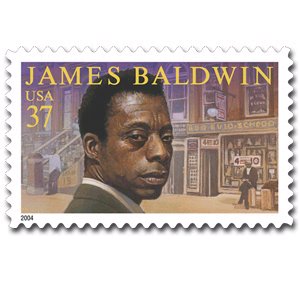
Journal #1 - James Baldwin quote


Great American writer James Baldwin wrote this about American history:

"American history is longer, larger, more various, more beautiful, and more terrible than anything anyone has ever said about it."

Question: What do you think he means by this quote (besides restating the obvious -"American history is longer, more beautiful...etc. ")? Use an example from first semester American history (or one that you're familiar with) that best captures this quote and explain why your incident/person/event applies to the quote. (minimum 200 words)

Things to think about when writing your response: try to go in depth by thinking about what has been taught or hasn't been taught about American minorities in the past. Consider how future Americans (your children and grandchildren) will look at today's history. What have you studied in the past that has really struck a nerve? Why?

Citation: James Baldwin (1924–1987), U.S. author. “A Talk To Teachers,” October 16, 1963, published in The Price of the Ticket (1985).