Sunday, November 19, 2006

Journal #6 - Evaluation of Teddy Roosevelt's presidency

Teddy Roosevelt was president for almost 8 full years between 1901-1909, and he ran for a 3rd term in 1912. That election ended up with Woodrow Wilson winning with the Republican votes divided between Taft and Roosevelt. This win for Wilson seemed to signal an end to TR's career.

During his presidency, TR felt that muckraking journalists were a danger to democracy b/c they riled up anti-government or anti-American feelings when they exposed government and business corruption. People like himself (educated, informed, those with good intentions) are the ones who should be controlling reform. Reform is better than revolution, TR believed.

These muckrakers were extremely pivotal in bringing about changes in monopolistic businesses (Standard Oil), changes in the meat and medicine industries, and in poverty and local and state government corruption. Yet, TR felt that he was the best of both worlds - reform but not radical reform.

So, my question for you is: who is right, TR or the muckrakers? Should the president lead reform or should it be the journalists? Or, do you think there should be someone else being at the forefront of business and government? Congress? Consumers? Explain your answer (in a minimum of 150 words).

Thursday, November 09, 2006

Journal #5 - Eugenics and Social Darwinism

During this unit on immigration and the growth in American cities, we looked a lot and discussed issues concerning the poor in America, both back then and now. Social Darwinism was used as a philosophy to justify the inequality between rich and poor before the 20th Century, and denying charity or help of any kind to the poor was seen as interference w/ natural law.

Eugenics became popular enough so that over 30 states had eugenics / sterilization laws on the books by 1935. According to some of the research out there, 70,000 Americans were involuntarily sterilized by 1970 for reasons like laziness, promiscuity, mental "deficencies", and the like. This way, the poor could not pass on their bad genes to their children thereby making more children. The thinking went, fewer poor people now = fewer poor children in the future.

But who gets to decide who is fit to have children and who isn't fit?

Tell me your reactions to our discussion this week about social Darwinism, eugenics, the poor, and the articles you were given. (Minimum 150 words reply please).

Feel free to discuss or react to other comments posted by students on the blog.

Sunday, October 22, 2006

Journal #4 - Should America Build a Wall At the Mexican Border?

In our next unit, we will be studying our immigration history, but specifically, we'll look at the time period of 1880s - 1924 when a huge influx of Eastern and Southern European immigrants arrived on our shores looking for work, land, the American Dream and freedom.

One question that swirls around the current immigration debate is whether or not a 700-mile wall should be built along the 1,952-mile border w/ Mexico. The House approved $2.2 billion for the wall back in December 2005 to "build a double set of steel walls with floodlights, surveillance cameras and motion detectors along one-third of the U.S.-Mexican border." 1 The Senate approved the bill shortly afterwards.

On Thursday, October 26, President Bush signed this bill into law. "Unfortunately the United States has not been in complete control of its borders for decades and therefore illegal immigration has been on the rise," Bush said at a signing ceremony. He called the fence bill "an important step in our nation's efforts to secure our borders." 3 (What's interesting to note about this Yahoo article that I quoted from here is that it can't even figure out how long the southern border of the U.S. is. One part of the article says it's a "nearly 2,000-mile border" while another part of the article refers to the "fence project covering one-third of the 2,100-mile border." Last time I checked, we haven't changed our southern border with Mexico since the Gadsden Purchase in 1853.)

So, what do you think? Does America need this wall? Why or why not? Read the articles on illegal immigration and decide before answering. Check on the links below to read some opinions. Your answer should be 150 words or more. Answer by Sunday night 10/29/06, 11:59 p.m.

1. Article from the San Fransico Chronicle: http://www.sfgate.com/cgi-bin/article.cgi?f=/c/a/2006/02/26/BORDERFENCE.TMP

2. Diagram of wall taken from website: http://www.dakotavoice.com/images/fence.jpg

3. http://news.yahoo.com/s/ap/20061026/ap_on_go_pr_wh/bush_immigration_8

Monday, October 16, 2006

Journal #3 - Modern Day Social Costs of Capitalism

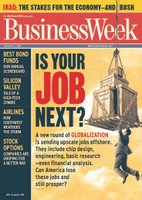
In our unit on late 19th Century industry and unions, we're examining the social costs of unregulated capitalism and the response in unions and labor strife/conflict. In today's world, we see a shrinking manufacturing work force with American jobs going overseas, the increased costs of health care for workers (with millions not covered as well), city slums and poverty (something that hasn't changed since the late 19th Century). Corporations are also downsizing which affect white color jobs and not just manufacturing jobs.

There are several options you can choose from when considering your journal. Pick one of the following questions and answer it fully in a journal of a minimum of 150 words.
1. With jobs going overseas (outsourcing), companies say that they need to do this to compete with other companies. For instance, companies send work overseas to cut costs and see their stock price jump as a result. Critics say that these foreign workers don't pay taxes to the American government like American workers would; also, the unemployed American workers become part of the unemployment pool. They may be overqualified for entry level jobs.
http://www.jsonline.com/story/index.aspx?id=519224 - Milwaukee Journal Sentinel's business article on outsourcing and its benefits.

Is there a limit of jobs that American companies should be allowed to export overseas? Or do American companies need to compete with other companies and shouldn't be held back by government restrictions?

2. Products made in foreign countries by workers (some of whom are under 18) allow American companies to keep prices lower for us, the American consumer. American businesses aren't bound by U.S. child labor laws but bound by the laws of the country. Plus, U.S. companies don't have to pay American minimum wages. This is taken from www.sweatshopwatch.org:
"According to independent labor rights organizations in Hong Kong, a living wage in China would be about $0.87/hour. Minimum wage rates vary as they are set by each provincial government, however, they do not meet this living wage. Shanghai's minimum is $0.21/hour, and Guangzhou's $0.26/hour.
("Behind the Label: Made in China," March 1998, Charles Kernaghan/National Labor Committee.) "

The question is: are you willing to continue buying goods from companies that use labor like this b/c of the price? Or are you willing to buy from companies that don't employ child labor or cheap labor overseas? Why? Explain. See the flyer or see www.sweatshops.org. http://www.sweatshopwatch.org/media/pdf/sweatfree_handout05.pdf

Tuesday, September 19, 2006

Photo ID to vote: Good idea or bad idea?

In Congress currently is H.R. 4844, a bill that would require voters to present a photo ID at the polls in order to vote. This quote is taken from http://thomas.loc.gov/.
"To amend the National Voter Registration Act of 1993 to require any individual who desires to register or re-register to vote in an election for Federal office to provide the appropriate State election official with proof that the individual is a citizen of the United States to prevent fraud in Federal elections, and for other purposes."

Pros and cons:
1. Photo ID helps prevent voter fraud.
2. Photo ID is impractical and costly for the elderly and poor.
3. Many people already have this ID - their driver's license - so it will cost little to implement.
4. There's little evidence to suggest that such voter fraud actually exists.
5. Illegal aliens are prevented from voting by such a law.
6. Judges have recently struck down laws like these (or given injunctions to stop them) in states like Missouri http://www.kansascity.com/mld/kansascity/news/politics/15519955.htm, Georgia, Ohio, Indiana, and Arizona.

Read up on it at http://www.salon.com/news/feature/2006/09/15/voterid/index_np.html

So tell us what you think: should Americans have a photo ID to vote in federal elections? Why or why not?

Tuesday, September 05, 2006

Journal #1 - Is Progress that separates the rich and the poor true progress?

Your job is to provide comments on the following quote:

"So long as all the increased wealth which modern progress brings goes but to build up great fortunes, to increase luxury and make sharper the contrast between the House of Have and the House of Want, progress is not real and cannot be permanent."

Henry George, Progress and Poverty. A passage from one of the most widely read American books in the 1880s, the author was highlighting the great puzzle of the era: Why did such great poverty exist at a time of such great progress and wealth? The question has been at the center of much of America's political life ever since.

A couple of questions to get you thinking for your journal response:
- Can America be a great nation w/ 15-20% of its populace living in poverty? Why or why not?
- Why do we still have these same problems of wealth disparity today that they did back in the 1880s?
- Can the solution to wealth disparity be found in the government or in businesses? Neither? Why?
- Why has America prospered so much while some other nations failed so miserably?

Thursday, May 11, 2006

Welcome to the U.S. History A Blog

Thanks for visiting the blog. If you're a visitor, please come back after the beginning of next school year in September when this will be active. Otherwise, for interesting stuff to read right now, go to www.excel10.blogspot.com for one of my other classes' blogs.

If you're a student, this will be the place where you'll make your comments and add your journals. If it's your turn to send a post, then email that post, along with any applicable pictures and email links to mrwickersham@gmail.com . Thanks.