Since we're doing history backwards, I want you to think about tying up any loose ends that you might have hanging since we're just past the halfway point in the semester.
There are a couple of things I'd like you to think about as you write blog #13:
1. Pick at least two areas / time periods - economics, energy, terrorism, Cold War, foreign policy, etc. - that we have studied and explain how the recent past(last forty years) has influenced current events within the past ten years or so (for instance, how has the Vietnam War impacted the way American Presidents have planned for future military engagements like the first Gulf War, Somalia, and the Iraq War). Be specific with your two examples as you trace the development of a theme or an idea through time and show how it has developed over time;
2. Evaluate your two time periods and the themes involved and explain why you think these have improved, stagnated, or devolved. For instance, has America learned its lessons from Vietnam? Why or why not?
300 words minimum. Due Monday, May 4 (25 points).
Tuesday, April 28, 2009


Friday, April 24, 2009
Blog #12 - Pick one of the 2 questions -
 Pick one of the following questions below:
 All week we have been talking about comparisons between the Vietnam War and the Iraq War. One of the issues has been about chemical weapons:
1. Agent Orange was used to destroy the foliage of Vietnam - 30% of the country - an area about the size of Massachusetts. Also, napalm was used to destroy and burn down the same jungles made almost 3 million Vietnamese refugees. AO caused cancer in American veterans and Vietnamese civilians as well as birth defects in their children.

- So my question for you (if you choose this one) is: is the use of chemical weapons ever appropriate? Does it depend on what kind and why they're used? Why?
2. The draft was used during the Civil War, WW1, WW2 and all the way through Vietnam. When enough volunteers weren't found, the government had to come through with a draft. Since the Iraq War began in 2003, a couple of Congressmen wrote a bill calling for an equitable draft that would eliminate many of the Vietnam-era inequalities (college, medical, deferments, Canada, Natio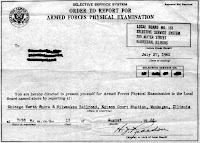 nal Guard, etc.) and included men and women.
 nal Guard, etc.) and included men and women.
- Question - Would you fight in the Iraq War if you were drafted? Why or why not? Are there any conditions under which you would / wouldn't fight if drafted? Explain 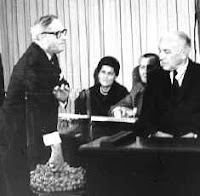 .
.
.200 words minimum. Due Tuesday, April 28, 2009.
Sunday, April 12, 2009
Saturday, April 25 in Grand Rapids, The Rescue
Check it out - here's the video on how you can help Invisible Children get psyched for their project, the Rescue, that's happening on Saturday night, April 25.
The Rescue Instructional Video from Jason Russell on Vimeo.
The Rescue Instructional Video from Jason Russell on Vimeo.
Wednesday, April 01, 2009
Blog #11 - Should Charlie Wilson be considered a hero?
 We watched some short videos about Charlie Wilson and learned a little bit his role in helping the Afghani muhajideen fight against the Soviet Red Army from 1980-89. Charlie brought taxpayer money together w/ Saudi money to buy (initially) Soviet weapons and then buy American shoulder-launched Stinger missiles to shoot down the Soviet helicopters.
 By supplying the Afghani fighters w/ aid, Charlie, Gust Avrakatos, Milt Bearden and the CIA helped end the Soviet Army's occupation of Afghanistan (and quite possibly) and the Cold War by bankrupting the Soviet Union.
  To quote Charlie Wilson's War, Act Two:
"Pakistan's then president, Gen. Mohammed Zia ul-Haq, who had allowed the weapons to move through his country on CIA-purchased mules, credited Wilson with the defeat of the Russians in Afghanistan. 'Charlie did it,' he said.
Thus, the largest covert operation in the CIA history ended with
Russia's humiliating withdrawal from Afghanistan.
But in Charlie Wilson's War (2003 Grove/Atlantic), George Crile notes that the
U.S.-financed war against the Soviets in Afghanistan also helped create the
political vacuum that was filled by the Taliban and Islamic extremists, who
turned their deadly terrorism against the United States on Sept. 11, 2001.
After the Soviet withdrawal, the CIA tried to buy back the weapons they
had supplied, but were largely unsuccessful."

At the end of the 60 Minutes profile on Charlie Wilson, Morley Safer said that Charlie felt that the U.S. was making the same mistake again and again; we were "changing the course of history" and then not helping to fix the situation after the war was over. Charlie felt that if Afghanistan was not fixed after 10 years of occupation, it could "fall into civil war and then become a home to terrorism."
As for Al-Qaeda, Osama Bin Laden and 9/11/01, Charlie felt that a terrorist attack was inevitable: " 'We would have had something like 9/11 anyways. I think that bin Laden had his course pretty well set... But when you fight a war, you do what you think you need to do at the time. What seems right at the time is what you do,' Wilson says."
Question: Should little-known Texas Congressman Charlie Wilson be considered a hero of the Cold War? Why or why not? Give some specifics from the videos that we've seen or article links that I've provided.
150 words minimum. Due Friday, April 3.
CNN interview with Charlie Wilson, retired Congressman: http://www.cnn.com/2008/SHOWBIZ/Movies/04/23/charlie.wilson/index.html
Sunday, March 29, 2009
Blog #10 - Does the world need a police officer?
One of the books that I've been reading lately is Colossus by Niall Feguson. The subtitle is also the focus of the book: "The Rise and Fall of The American Empire." In it, Ferguson discusses how Americans are not typical imperialists; during the Cold War (which we will begin studying soon), we had "an empire of invitation" and not one necessarily of conquest. We had allies, not territories to rule over (or at least that's how many of us like to see it).
We see these sentiments in speeches all the time. Before (1st quote) and after (2nd quote) we invaded Iraq, President Bush stated:
We see these sentiments in speeches all the time. Before (1st quote) and after (2nd quote) we invaded Iraq, President Bush stated:
"The U.S. has no intention of determining the precise form of Iraq's new
government. That choice belongs to the Iraqi people... We will remain in
Iraq as long as necessary and not a day more. America has made and kept
this kind of commitment before in the peace that followed a world war.
After defeating enemies, we did not leave behind occupying armies, we left
behind constitutions and parliaments."
"We will help build a peaceful and representative government that protects
the rights of all citizens. And then our military forces will leave.
Iraq will go forwardas a unified, independent and sovereign nation... Other
nations in history have have fought in foreign lands and remained to occupy and
exploit. Americans, following a battle, want nothing more than to return
home."
Ferguson suggests that the U.S. could use its power for good in this unstable world today. He said that the United Nations is too fractured to be effective and that the members of the U.N.'s Security Council (like Germany, France, and China) have vetoed military actions. Compared to China or India or the Arab nations, the United States is best suited economically, politically, and militarily to lead the world out of chaos and into stability and order.
So, the question for you is about America and its role as the world's police officer: 1. Should America act as the world's police officer? If yes, why? If not, what should its role be?
Questions to consider:
Saturday, March 28, 2009
Wednesday, March 25, 2009
Link to Ten Trillion and Counting...
Hey, I realized that PBS decided to carry the President's press conference and then something on First Lady Betty Ford. So here's a link to Frontline's website where you can watch it:
http://www.pbs.org/wgbh/pages/frontline/tentrillion/view/
http://www.pbs.org/wgbh/pages/frontline/tentrillion/view/
Sunday, March 22, 2009
Blog #9 - The Iraq War
 Coming into its 7th year, the Iraq War may be winding down based upon President Obama's plan to shift the front of the war on terror to Afghanistan and take it to the Taliban and Al- Qaeda. Out of the 130,000 soldiers in Iraq, Obama wants to leave around 50,000 in Iraq though Congressional Democrats want to leave only 15,000 in the country.
 When the history of the war will be written, historians will have to consider several questions (2 of which you'll answer below):
1. What should future generations be taught about the war?
2. What do you think we will remember about the war after it's all over?
200 words total - Answer due by Wednesday, March 25
Washington Post military correspondent Thomas E. Ricks stated at the conclusion of his latest book on the war, The Gamble, that the events for which the war will be most remembered have not yet happened. Maybe that's true. Maybe not. I believe most people will remember the prison torture scandal of Abu Ghraib. They'll remember the statue of Saddam toppeling over, and they'll probably won't forget the haphazard reconstruction efforts in the first few months of the occupation in the spring and summer of 2003.

Fox News' coverage of the war: http://www.foxnews.com/story/0,2933,79630,00.html
CNN's War in Iraq: http://www.cnn.com/SPECIALS/2003/iraq/
The Nation's coverage of the war: http://www.thenation.com/sections/iraq_war
Wednesday, March 11, 2009
Blog #8 - Economic Meltdown - How would you respond...?
 In talking about the economic problems in the country today, we've mentioned a lot of different things:
1. Many people are getting laid off or fired (including all the Pontiac teachers and administrators);
2. Businesses are closing their doors - Circuit City, Trader Joe's, Barnes and Noble on Maple and Telegraph.
3. Homes are being foreclosed or their price has plummeted far below their mortgage price - there are FOR SALE signs littering neighborhoods like a bad headache.

4. The stock market has lost almost 45% of its value since the summer of 2008, families' retirement accounts and college funds have lost their value dramatically.
Blog: Pick two of the issues above and imagine how those two issues that you have picked would impact you and your family. For example, how would you and your family be affected if you suddenly lost your home? What would happen if your college fund was suddenly cut in half? If you had your sights set on Harvard, how would your college plans change?
Minimum 200 words. Due Monday, March 16th.
Wednesday, November 19, 2008
CNN's Campbell Brown on the Big 3's Bailout
In her No Bias, No Bull section of the broadcast, Campbell Brown let's it rip on the Big 3. I think she's got some very valid points when it comes to the long long wait for more fuel efficient cars and big fat CEO paychecks. Listen to what she has to say below:
Sound off and tell me what you think.
Thanks.
Sound off and tell me what you think.
Thanks.
Friday, November 14, 2008
Completed Questions for Articles on Economic Turmoil
Please read instructions first:
 I wanted to get you started with these first two articles tonight. You will not have to answer all of these questions, just some of them. The red, bold questions are required, and after I'm finished with the last two articles, I'll give you a total # on how many you have to answer.
**Please make sure that you do your own, independent work. I will be providing some vocabulary words and additional explanation for the articles.
“The End of Prosperity?” by Niall Ferguson.
1. What has been happening to the U.S. housing market since 2007?
2. How many homeowners might lose their homes, according to worst case scenarios?
3. Why are banks and other financial institutions in bigger trouble?
4. How does the “drastic reduction of credit” affect smaller companies like the car dealer example?
The Historical Parallels
5. What happened to the stock market in the 3 years after the crash of 1929?
6. How did the stock market react on Sept. 29 (2008) after Congress initially rejected the bailout?
7. What does Milton Friedman and Anna Schwartz’s book say is the cause of the Great Depression?
Why Depression 2.0 Can Still Be Avoided
8. How has current Federal Reserve Chairman Ben Bernanke tried to keep from repeating past mistakes?
9. Gi ve 2 examples of how America’s economic turmoil has gone global.
“11 Questions About the $700 Billion” by Justin Fox and the section at the bottom of the page called “Need a Loan?”
11 Questions
10. Who gets the $700 billion?
11. Why is it a problem if more than one leveraged financial institution (banks, investment banks, etc.) collapses?
12. Will the government get all of its money back? Why or why not?
13. Who does Fox blame for the crisis?
Need a Loan?
14. What is the biggest hurdle in getting a mortgage now?
15. How are credit card companies changing their strategies?
16. How does the credit crunch affect student loans?
“How They Failed Us” by Michael Grunwald.
17. Why do many people not trust both parties in government, according to the author of the article? Provide at least two specific examples.
18. How did both Senator Obama and Senator McCain react/deal with the negotiations over the bailout plan?
The Credibility Gap - required: pick one of the following four questions
19. Why is it surprising to see House Republicans vote against the bailout bill and break with President Bush?
20. Why wasn’t the bailout plan popular with liberals or conservatives?
21. How did the Bush administration fail to “sell” their plan to the American public?
22. Why did the opposition to the bailout change practically overnight?
"Death By Rescue" by Donald Luskin - required: pick one of the following five questions
I'm From the Government, and I'm Here to Help
23. What does the article list as possible causes for the collapse of the financial markets in the past few months?
24. With the Bear Stearns bank bailout in March 2008, the Federal Reserve negotiated its sale to a competitor (JP Morgan bank) on a Sunday night when the stock market wasn’t open for business. Why does this kind of deal only make it attractive for other helpless banks to find a good deal and not have to face the consequences?
Falling One By One
25. What is your reaction to the government allowing competing mega-banks to buy each other out for below-market value that the company is worth while the government uses taxpayers’ money to pay for the sale?
I thought of it this way:
I wanted to get you started with these first two articles tonight. You will not have to answer all of these questions, just some of them. The red, bold questions are required, and after I'm finished with the last two articles, I'll give you a total # on how many you have to answer.**Please make sure that you do your own, independent work. I will be providing some vocabulary words and additional explanation for the articles.
“The End of Prosperity?” by Niall Ferguson.
1. What has been happening to the U.S. housing market since 2007?
2. How many homeowners might lose their homes, according to worst case scenarios?
3. Why are banks and other financial institutions in bigger trouble?
4. How does the “drastic reduction of credit” affect smaller companies like the car dealer example?
The Historical Parallels
5. What happened to the stock market in the 3 years after the crash of 1929?
6. How did the stock market react on Sept. 29 (2008) after Congress initially rejected the bailout?
7. What does Milton Friedman and Anna Schwartz’s book say is the cause of the Great Depression?
Why Depression 2.0 Can Still Be Avoided
8. How has current Federal Reserve Chairman Ben Bernanke tried to keep from repeating past mistakes?
9. Gi
 ve 2 examples of how America’s economic turmoil has gone global.
 “11 Questions About the $700 Billion” by Justin Fox and the section at the bottom of the page called “Need a Loan?”
11 Questions
10. Who gets the $700 billion?
11. Why is it a problem if more than one leveraged financial institution (banks, investment banks, etc.) collapses?
12. Will the government get all of its money back? Why or why not?
13. Who does Fox blame for the crisis?
Need a Loan?
14. What is the biggest hurdle in getting a mortgage now?
15. How are credit card companies changing their strategies?
16. How does the credit crunch affect student loans?
“How They Failed Us” by Michael Grunwald.
17. Why do many people not trust both parties in government, according to the author of the article? Provide at least two specific examples.
18. How did both Senator Obama and Senator McCain react/deal with the negotiations over the bailout plan?
The Credibility Gap - required: pick one of the following four questions
19. Why is it surprising to see House Republicans vote against the bailout bill and break with President Bush?
20. Why wasn’t the bailout plan popular with liberals or conservatives?
21. How did the Bush administration fail to “sell” their plan to the American public?
22. Why did the opposition to the bailout change practically overnight?
"Death By Rescue" by Donald Luskin - required: pick one of the following five questions
I'm From the Government, and I'm Here to Help
23. What does the article list as possible causes for the collapse of the financial markets in the past few months?
24. With the Bear Stearns bank bailout in March 2008, the Federal Reserve negotiated its sale to a competitor (JP Morgan bank) on a Sunday night when the stock market wasn’t open for business. Why does this kind of deal only make it attractive for other helpless banks to find a good deal and not have to face the consequences?
Falling One By One
25. What is your reaction to the government allowing competing mega-banks to buy each other out for below-market value that the company is worth while the government uses taxpayers’ money to pay for the sale?
I thought of it this way:
That would be like the government allowing McDonalds to buy Burger King for 1/10
its value as a company and then allowing McDonalds to use tax dollars to pay for
the sale. The rationale is that if Burger King goes out of business, the
jobs lost will damage the economy and all of the shareholders invested in Burger
King will lose money. And what about the companies that sell BK their
hamburger, buns, potatoes and pop? All those companies could be hurt too,
so the best thing to do, of course, is to let McDonalds buy BK. And
McDonalds will pay the U.S. government back if it ever makes a profit on any of
this. What’s that, you ask? What about all of those competing stores
right next to each other? Well, you can leave them up and keep selling the
same product, but if a McDonalds is losing to a BK somewhere, that BK is
probably gonna have to close down and those folks will be thrown out of
work. Wait! Isn’t that what we’re trying to avoid? Yep.
So….
Urgency, Then Inaction
26. Doesn’t it make you wonder what’s really going on when written into the $700 billion bailout law are specific instructions about “provisions related to film and television productions” and an “exemption from excise tax for certain wooden arrows designed for use by children” but little specifics on where the $700 billion should be spent? Why or why not?
27. Why does the author believe that the $250 billion in bailout money used in October 2008 was the best way to use that money?
Thursday, November 06, 2008
Blog #7 - Why are we still fighting over evolution and creation today?
The Scopes Trial in Dayton, Tennessee was labeled the "Trial of the Century" when it occurred in July 1925. Editors across the country called it thus b/c the case represented so much of what was going on in the 1920s:
1. Old vs. New
2. Rural vs. Urban
3. God vs. Science
4. Faith vs. Reason
5. Traditional values vs. city morals
Celebrity lawyers Clarence Darrow and William Jennings Bryan battled for eleven days with very different intentions: Darrow wanted to put the Butler Act (Tennessee's state law banning the teaching of evolution) on trial while Bryan sought to rid the world of Darwinian thought seeing World War 1 and Social Darwinism as its end result). Scopes was eventually found guilty, fined $100 (which both the ACLU and Bryan offered to pay for him). Unfortunately, five days after the trial, Bryan died in Dayton.
In 1926, Mississippi becomes the 2nd state to outlaw the teaching of evolution. The next year, the Tennessee state Supreme Court affirms the Butler Act but overturns Scopes conviction on a technicality. 1928, Arkansas becomes the 3rd state to ban evolution.
Eventually, Tennessee would repeal the Butler Act in 1967 but pass a law in 1973 that requires science teachers to give equal time to creation as a competing theory to the origin of man. In 1968, 1982, and 1987, the U.S. Supreme Court declares these laws banning evolution (or requiring creation to be taught) as unconstitutional. It seemed that by 1987, the debate was over.
But, it's not. According to the article I handed out, "Monkey See, Monkey Do", Intelligent Design (ID) has taken the place of creation in classrooms and school board meetings around the country. There is even a think tank university dedicated to promoting ID teaching in public schools. President Bush believes that ID should be presented as a competing theory. One of the problems with ID is that there is no scientific basis to support it as a theory.
A school district in Dover, Penn. was prohibited by a judge from teaching ID in its biology classes in 2005, and the three school board members who pushed for its inclusion in the high school curriculum were recently ousted from the board after national embarassment. See the CNN link for this case: http://www.cnn.com/2005/LAW/12/20/intelligent.design/index.html
So my question is two fold:
1. Does the teaching of creation / Intelligent Design in public schools cross the line when it comes to separation of church and state (where the government should not endorse or favor one religion -in this case the Judeo-Christian religion - over another) as specified in the 1st Amendment? Why or why not?
2. Should creation / ID be presented as a competing theory for the origin of man along with evolution in public schools? And why in the world hasn't this controversy gone away even 81 years after the Scopes Trial?
Answer both questions in a minimum of 200 words total. Due Friday, 11/7.
Great timeline on the Scopes Trial and Creation / Evolution controversy:
http://www.npr.org/templates/story/story.php?storyId=4723956
More Evolution / Scopes Trial websites:
http://www.law.umkc.edu/faculty/projects/ftrials/scopes/evolut.htm
http://www.pbs.org/wgbh/amex/monkeytrial/
http://www.scopestrial.org/
http://www.scopestrial.org/inhisimage.htm
http://www.pbs.org/wgbh/evolution/library/08/2/l_082_01.html
1. Old vs. New
2. Rural vs. Urban
3. God vs. Science
4. Faith vs. Reason
5. Traditional values vs. city morals
Celebrity lawyers Clarence Darrow and William Jennings Bryan battled for eleven days with very different intentions: Darrow wanted to put the Butler Act (Tennessee's state law banning the teaching of evolution) on trial while Bryan sought to rid the world of Darwinian thought seeing World War 1 and Social Darwinism as its end result). Scopes was eventually found guilty, fined $100 (which both the ACLU and Bryan offered to pay for him). Unfortunately, five days after the trial, Bryan died in Dayton.
In 1926, Mississippi becomes the 2nd state to outlaw the teaching of evolution. The next year, the Tennessee state Supreme Court affirms the Butler Act but overturns Scopes conviction on a technicality. 1928, Arkansas becomes the 3rd state to ban evolution.
Eventually, Tennessee would repeal the Butler Act in 1967 but pass a law in 1973 that requires science teachers to give equal time to creation as a competing theory to the origin of man. In 1968, 1982, and 1987, the U.S. Supreme Court declares these laws banning evolution (or requiring creation to be taught) as unconstitutional. It seemed that by 1987, the debate was over.
But, it's not. According to the article I handed out, "Monkey See, Monkey Do", Intelligent Design (ID) has taken the place of creation in classrooms and school board meetings around the country. There is even a think tank university dedicated to promoting ID teaching in public schools. President Bush believes that ID should be presented as a competing theory. One of the problems with ID is that there is no scientific basis to support it as a theory.
A school district in Dover, Penn. was prohibited by a judge from teaching ID in its biology classes in 2005, and the three school board members who pushed for its inclusion in the high school curriculum were recently ousted from the board after national embarassment. See the CNN link for this case: http://www.cnn.com/2005/LAW/12/20/intelligent.design/index.html
So my question is two fold:
1. Does the teaching of creation / Intelligent Design in public schools cross the line when it comes to separation of church and state (where the government should not endorse or favor one religion -in this case the Judeo-Christian religion - over another) as specified in the 1st Amendment? Why or why not?
2. Should creation / ID be presented as a competing theory for the origin of man along with evolution in public schools? And why in the world hasn't this controversy gone away even 81 years after the Scopes Trial?
Answer both questions in a minimum of 200 words total. Due Friday, 11/7.
Great timeline on the Scopes Trial and Creation / Evolution controversy:
http://www.npr.org/templates/story/story.php?storyId=4723956
More Evolution / Scopes Trial websites:
http://www.law.umkc.edu/faculty/projects/ftrials/scopes/evolut.htm
http://www.pbs.org/wgbh/amex/monkeytrial/
http://www.scopestrial.org/
http://www.scopestrial.org/inhisimage.htm
http://www.pbs.org/wgbh/evolution/library/08/2/l_082_01.html
Saturday, October 25, 2008
Blog #6 - Free Speech During War Time - Treason or Acceptable?
 During the Great War, the United States went to great lengths to stop people from expressing their views on the war and the draft. According to historian Sean Dennis Cashman, Wilson that war "required illiberalism at home to reinforce the men at the front. We couldn't fight Germany and maintain the ideals of Government that all thinking men shared...once led into war, [Americans] will forget there ever was such a thing as tolerance" (505). So, in order to set Europe free from tyranny, we had to restrict America more of its rights.
Historian Howard Zinn has written at length that part of this suppression was done to keep Americans from expressing their anti-war sentiments/feelings:
- Why should we get into a war that we have no interests in? This is only about European colonialists, not U.S. interests;
- Why should I be drafted to go protect France or Belgium? (only 73,000 volunteered in the first 6 weeks after Wilson declared war on Germany in April 1917);
- Why should we spend millions and millions of our tax money to do this?;
- Why should we join a war that current French soldiers are beginning to mutiny against? (in essence, why we should we join a losing fight?);
- Why should we break away from our tradition of isolationism? It's served us well for this long (if it ain't broke, don't fix it);
So Wilson and Congress together got tough on this kind of anti-war talk and anti-draft interference w/ the Espionage Act of 1917 and the Sedition Act of 1918. The Supreme Court affirmed that we do NOT have the right to free speech as long as it creates a "clear and present danger" (much like yelling "FIRE!" in a crowded theatre like Supreme Court Justice Oliver Wendell Holmes so eloquently phrased it in the 1919 court decision, Schenck vs. U.S.).
A speech like this one by Eugene Debs is the kind of thing that got him in trouble and thrown in the big house:
 "Wars throughout history have been waged for conquest and plunder. ...the working class who fight all the battles, the working class who make the supreme sacrifices, the working class who freely shed their blood and furnish their corpses, have never yet had a voice in either declaring war or making peace. It is the ruling class that invariably does both. They alone declare war and they alone make peace. They are continually talking about their patriotic duty. It is not their but your patriotic duty that they are concerned about. There is a decided difference. Their patriotic duty never takes them to the firing line or chucks them into the trenches." (emphasis added)
*Debs was sentenced to jail for this speech and while in jail ran for President under the Socialist Party for which he received almost one million votes in 1912 and in 1920! Website for Debs: http://www.eugenevdebs.com/
But my question still remains:
- is questioning your country's conduct during a war o.k.?
- Should asking questions about how the war is conducted, about the tactics being used (torture, waterboarding, etc.), about how the goals are being met (or if they're being met at all), or is it all worth the sacrifice of all the young men and women's lives??
- Is this line of questioning during war time o.k. or does it make you unpatriotic? Why?
Minimum of 200 word response - due Monday, October 27th.
Sunday, October 19, 2008
That's So Gay
Here are a couple of public service announcements that try to get people to think about using the phrase, "that's so gay". The first one includes Hillary Duff.
http://thinkb4youspeak.com/
http://thinkb4youspeak.com/
Thursday, October 16, 2008
Blog #5 - Which debate option do you think is the best?
 During our debate, we pretended that we were back in 1898 after having won the Spanish-American War and taken over colonies from Spain like the Philippine Islands. Option 1 argued that America should keep the Philippines and begin the development of an American empire. Option 2 felt that America needed to walk away from the potential empire that we were about to grab ahold of at that time. Option 3 includes the main idea of keeping the important harbor of Manila in the Philippines only, but not the rest of the archipelago. This is more of a business-centered focus as opposed to military (Option 1) or moral (like Option 2).
I want you to look at this from 2 angles:
1. In 1898, which option do you think was best for America? Why?
2. And now, which option do you think would be best for America today if we continue to gain more territory?
(150 words minimum - please make sure you answer both questions). Due Monday 10/20/08

Additional websites/assets:
Reenacted trench battle film from 1899 in the war (it's o.k. to laugh, no one died in this fake battle footage): mailto:NUMBER+@band(sawmp+0849))+@field(COLLID+spanam))
Friday, October 10, 2008
The Next Blog (#4) in a Long Series of Excellent Blogs - Is America an Empire?
There have been dozens of books written lately about how America has become an empire - especially with the invasion of Iraq in March 2003.
The premise of many of these books is that whether we like it or not, America is an empire. Whether we like acknowledging it or not is whole other thing.


When many people think of empires, we tend to think of the ancient Romans with their gladiators and colisseums, or the British Empire and some guy in a funny-looking pith helmet tromping through the African jungle: "Dr. Livingston, I presume?" With the word "empire" or "imperialism" comes so much negative baggage; plus, those words are so down-right anti-democratic. If we're controlling the destinies of other countries, how are we allowing them to be democratic and free nations?
Being an imperialist nation, apparently, has been something we've been working at for several decades now. A book by Stephen Kinzer called Overthrow outlines over a dozen instances where the United States has taken control of a country b/c our business or political interests were threatened, resources were slipping out of control, or during the Cold War, we felt the creep of socialism/communism get too close.

The premise of many of these books is that whether we like it or not, America is an empire. Whether we like acknowledging it or not is whole other thing.


When many people think of empires, we tend to think of the ancient Romans with their gladiators and colisseums, or the British Empire and some guy in a funny-looking pith helmet tromping through the African jungle: "Dr. Livingston, I presume?" With the word "empire" or "imperialism" comes so much negative baggage; plus, those words are so down-right anti-democratic. If we're controlling the destinies of other countries, how are we allowing them to be democratic and free nations?
Being an imperialist nation, apparently, has been something we've been working at for several decades now. A book by Stephen Kinzer called Overthrow outlines over a dozen instances where the United States has taken control of a country b/c our business or political interests were threatened, resources were slipping out of control, or during the Cold War, we felt the creep of socialism/communism get too close.

When comparing the early 20th Century to today we will talk about how widespread today's American military is across the world: 700 military bases in 60 countries; 1.4 million soldiers. There's an upside to all of this - don't get me wrong! Because of these brave men and women, we're so much safer than we would be without them. I am grateful for theirs and their families' sacrifices.
The question to answer: Is America an empire? Why or why not?
Questions to consider but not necessarily answer - is the course we've taken towards building an empire worth the hatred of the world? Our safety doesn't mean much when terrorists want to kill us at home. Morally, are we doing the right thing by keeping other countries from determining their own destiny? Economically, is the tax money we're spending on our military also the right thing to do? Should the other countries of the world shoulder their own defense expense? Why or why not?
Questions to consider but not necessarily answer - is the course we've taken towards building an empire worth the hatred of the world? Our safety doesn't mean much when terrorists want to kill us at home. Morally, are we doing the right thing by keeping other countries from determining their own destiny? Economically, is the tax money we're spending on our military also the right thing to do? Should the other countries of the world shoulder their own defense expense? Why or why not?
Minimum response - 200 words - due Monday- 10.13.08
Find out how we overthrew Iran in 1953: A Folly of Attacking Iran: Lessons from History - http://www.youtube.com/watch?v=AJRcOF7rEfQ
Wednesday, October 01, 2008
Blog #3 - Pick a question
Sorry this is late: DUE FRIDAY 10/3/08
Pick one of the following questions and answer it with a minimum of 150 words:
1. Should the estimated 12 million illegal immigrants in the country get a chance at citizenship by learning English, paying fines and work towards citizenship? Why or why not?
2. Should America make English its official language? How about English and Spanish? Think about the consequences for the country and compare it to Canada. For either question, why or why not?
3. Is it important that America maintain the wall along its Mexican border? Or do you think the wall is unfair and a symbol of oppression? Think about the issues brought up in the TIME article (crime, health care, national security, etc.) and tell us what you think.
Thanks.
Pick one of the following questions and answer it with a minimum of 150 words:
1. Should the estimated 12 million illegal immigrants in the country get a chance at citizenship by learning English, paying fines and work towards citizenship? Why or why not?
2. Should America make English its official language? How about English and Spanish? Think about the consequences for the country and compare it to Canada. For either question, why or why not?
3. Is it important that America maintain the wall along its Mexican border? Or do you think the wall is unfair and a symbol of oppression? Think about the issues brought up in the TIME article (crime, health care, national security, etc.) and tell us what you think.
Thanks.
Friday, September 19, 2008
Blog #2 - Still Unanswered Questions?
 We did a power writing session earlier this week, and in it, you were asked to write about five things you were certain of, and write down three things you were confused about concerning our unit on industry and unions in the late 19th Century. Now, I'm asking you to think once again about the stuff you're still unsure of even after taking the test on Friday.
After linking corruption in the business world today to the abuse of power back then, and contrasting moral businessmen like J.P. Morgan with modern ones like the Enron head honchos, after comparing Carnegie Steel and Standard Oil with Clear Channel's vertical and horizontal integation, what nagging question still remains? Is there something that you're not quite still clear about?
There were some great questions on the power writing. For example:
1. How could Enron look profitable for so long yet practically collapse almost over night?
2. Why do people get so greedy that they'll risk everything?
3. How is Clear Channel a monopoly if they only own 10% of the market?
4. Apple appears to be nice and friendly in their ads, but that article, at least the author, seems to really hate Apple. Why?
Your job, in Blog #2, is to pick your toughest question that still nags you and try to answer it in no less than 150 words. Due Monday, Sept. 22, 2008.
Thursday, September 04, 2008
Blog #1 - Pick a quote and analyze it
Pick one of these quotes and tell me what you think the speaker means by it and what the President is saying about democracy / government specifically.
1. Mankind must put an end to war, or war will put an end to mankind...War will exist until that distant day when the conscientious objector enjoys the same reputation and prestige that the warrior does today. John F. Kennedy
2. No man is good enough to govern another man without that other's consent. Abraham Lincoln
3. Finishing second in the Olympics gets you silver. Finishing second in politics gets you oblivion. Richard Nixon
4. People ask the difference between a leader and a [political] boss. . . . The leader works in the open, and the boss in covert. The leader leads, and the boss drives. Teddy Roosevelt
5. Liberty has never come from the government. Liberty has always come from the subjects of it. The history of liberty is a history of resistance. Woodrow Wilson
6. No democracy can long survive which does not accept as fundamental to its very existence the recognition of the rights of minorities.
The test of our progress is not whether we add more to the abundance of those who have much; it is whether we provide enough for those who have too little. Franklin Roosevelt
Minimum 150 words. Due Monday, September 8.
1. Mankind must put an end to war, or war will put an end to mankind...War will exist until that distant day when the conscientious objector enjoys the same reputation and prestige that the warrior does today. John F. Kennedy
2. No man is good enough to govern another man without that other's consent. Abraham Lincoln
3. Finishing second in the Olympics gets you silver. Finishing second in politics gets you oblivion. Richard Nixon
4. People ask the difference between a leader and a [political] boss. . . . The leader works in the open, and the boss in covert. The leader leads, and the boss drives. Teddy Roosevelt
5. Liberty has never come from the government. Liberty has always come from the subjects of it. The history of liberty is a history of resistance. Woodrow Wilson
6. No democracy can long survive which does not accept as fundamental to its very existence the recognition of the rights of minorities.
The test of our progress is not whether we add more to the abundance of those who have much; it is whether we provide enough for those who have too little. Franklin Roosevelt
Minimum 150 words. Due Monday, September 8.
Tuesday, June 17, 2008
Is hell freezing over?
Or does this message - by the Reverend Al Sharpton, an outspoken civil rights leader, and Pat Robertson, televangelist known for his conservative views - show a "thawing" of partisan relations?
Could it be that politicians on the left and the right are finally getting a clue?
Only time will tell.
Here's another one featuring current Speaker of the House, Democrat Nancy Pelosi and former Speaker, Republican Newt Gingrich.
Check it out at http://wecansolveit.org/
Could it be that politicians on the left and the right are finally getting a clue?
Only time will tell.
Here's another one featuring current Speaker of the House, Democrat Nancy Pelosi and former Speaker, Republican Newt Gingrich.
Check it out at http://wecansolveit.org/
Subscribe to:
Posts (Atom)